Baroque Churches of the Philippines (UNESCO 677)
Cultural World Heritage in Philippines, inscribed in 1993
The Baroque Churches of the Philippines is a serial inscription consisting of four Roman Catholic churches constructed between the 16thand the18th centuries in the Spanish period of the Philippines. They are located in separate areas of the Philippine archipelago, two at the northern island of Luzon, one at the heart of Intramuros, Manila, and the other in the central Visayas island of Iloilo. This group of churches established a style of building and design that was adapted to the physical conditions in the Philippines and had an important influence on later church architecture in the region. The four churches are outstanding examples of the Philippine interpretation of the Baroque style, and represent the fusion of European church design and construction with local materials and decorative motifs to form a new church-building tradition.
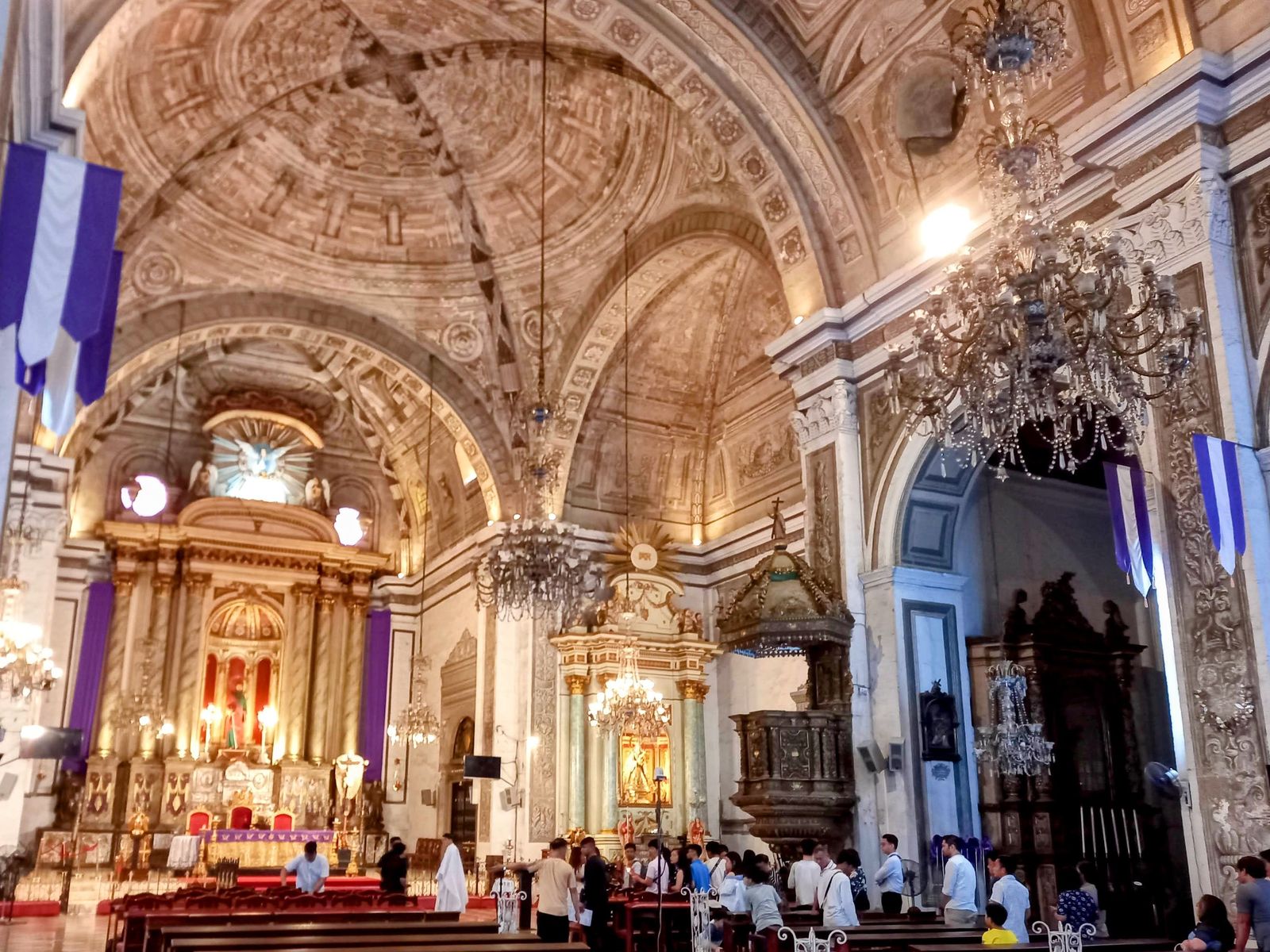
The common and specific attributes of the churches are their squat, monumental and massive appearance, which illustrates a fortress/protective-like character in response to pirates, marauders and to the geologic conditions of a country that is prone to seismic activities. The churches are made either of stone (tuff or coralline limestone), or brick, and consolidated with lime. They display specific features such as retablos (altars) of high Baroque style – (particularly seen in San Agustin Church, Intramuros), in the volutes of contrafuertes (buttresses) and in the pyramidal finials of wall facades – (particularly seen in Paoay Church), in wall buttresses separating criptocollateral chapels –(particularly seen in San Agustin Church, Intramuros) and in the iconography of the ornately decorated naïf/folk pediment expressing the local understanding of the life of Christ and demonstrated by the use of local elements (papaya, coconut and palm tree reliefs), and the depiction of Catholic Patron Saints (St. Christopher) dressed in local and traditional clothing (particularly seen in the Miagao Church).
The fusion of styles is also seen in the construction of bell towers that are either attached to the main church structure (particularly seen in San Agustin, Intramuros and in Miagao churches) or detached from the main church (particularly seen in Paoay and Sta Maria churches) and lastly, in ceiling paintings in the tromp l’oeil style (particularly seen in San Agustin Church, Intramuros). The Baroque churches reflect excellent site planning principles following the Ley de las Indias (Laws of the Indies) enacted by Philip II in 1563 for all newly-discovered settlements within Spanish colonial territories.