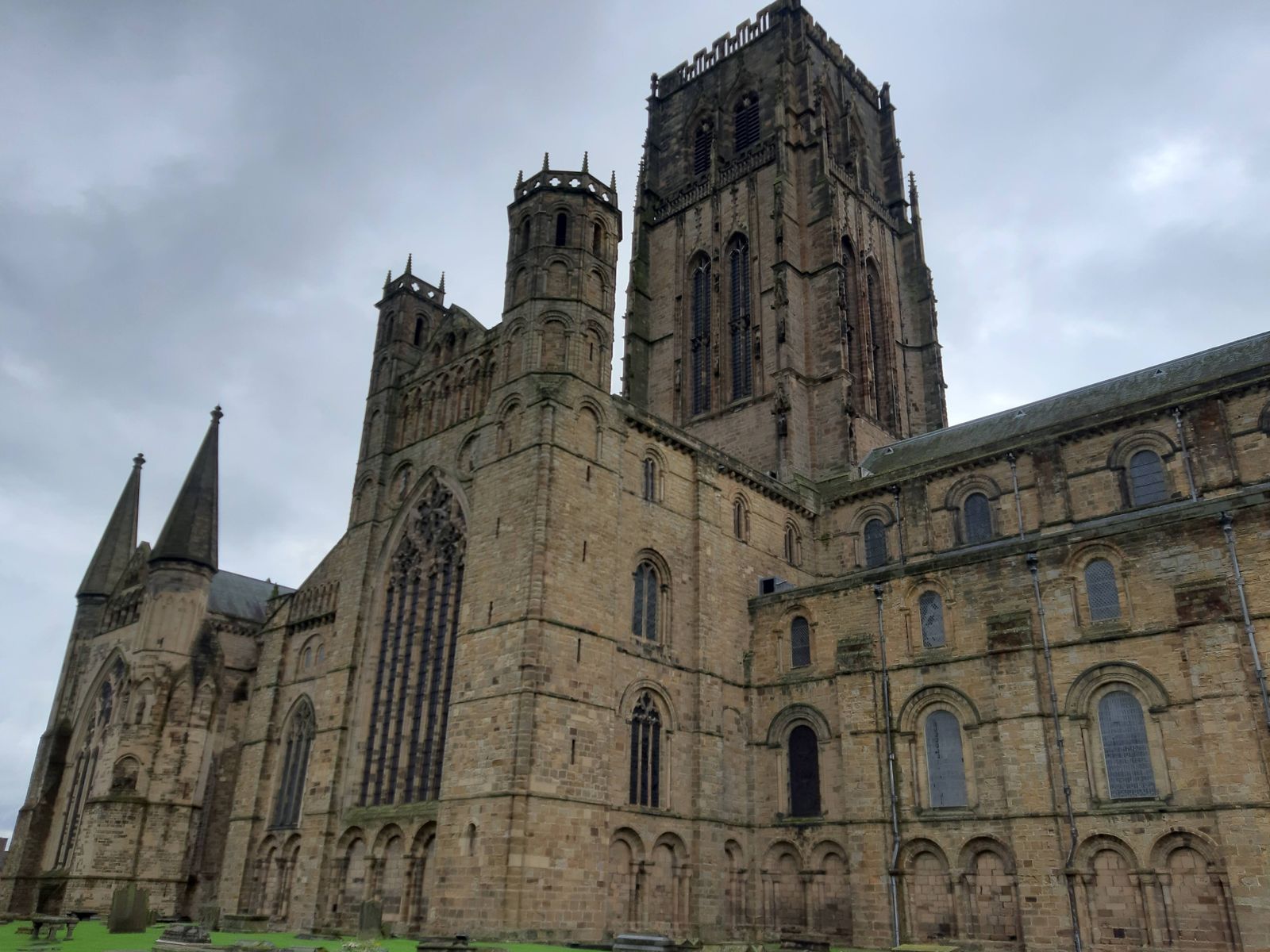
Durham Castle and Cathedral (UNESCO 370)
Cultural World Heritage in United Kingdom of Great Britain and Northern Ireland, inscribed in 1986
Durham Cathedral was built between the late 11th and early 12th century to house the bodies of St. Cuthbert (634-687 AD) (the evangeliser of Northumbria) and the Venerable Bede (672/3-735 AD). It attests to the importance of the early Benedictine monastic community and is the largest and finest example of Norman architecture in England. The innovative audacity of its vaulting foreshadowed Gothic architecture.
The Cathedral lies within the precinct of Durham Castle, first constructed in the late eleventh century under the orders of William the Conqueror. The Castle was the stronghold and residence of the Prince-Bishops of Durham, who were given virtual autonomy in return for protecting the northern boundaries of England, and thus held both religious and secular power. Within the Castle precinct are later buildings of the Durham Palatinate, reflecting the Prince-Bishops’ civic responsibilities and privileges. These include the Bishop’s Court (now a library), almshouses, and schools.
Palace Green, a large open space connecting the various buildings of the site once provided the Prince Bishops with a venue for processions and gatherings befitting their status, and is now still a forum for public events. The Cathedral and Castle are located on a peninsula formed by a bend in the River Wear with steep river banks constituting a natural line of defence. These were essential both for the community of St. Cuthbert, who came to Durham in the tenth century in search of a safe base (having suffered periodic Viking raids over the course of several centuries), and for the Prince-Bishops of Durham, protectors of the turbulent English frontier.
The site is significant because of the exceptional architecture demonstrating architectural innovation and the visual drama of the Cathedral and Castle on the peninsula, and for the associations with notions of romantic beauty in tangible form. The physical expression of the spiritual and secular powers of the medieval Bishops’ Palatinate is shown by the defended complex and by the importance of its archaeological remains, which are directly related to its history and continuity of use over the past 1000 years. The relics and material culture of three saints, (Cuthbert, Bede, and Oswald) buried at the site and, in particular, the cultural and religious traditions and historical memories associated with the relics of St Cuthbert and the Venerable Bede, demonstrate the continuity of use and ownership over the past millennium as a place of religious worship, learning, and residence in tangible form. The property demonstrates its role as a political statement of Norman power imposed on a subjugate nation and as one of the country's most powerful symbols of the Norman Conquest of Britain.