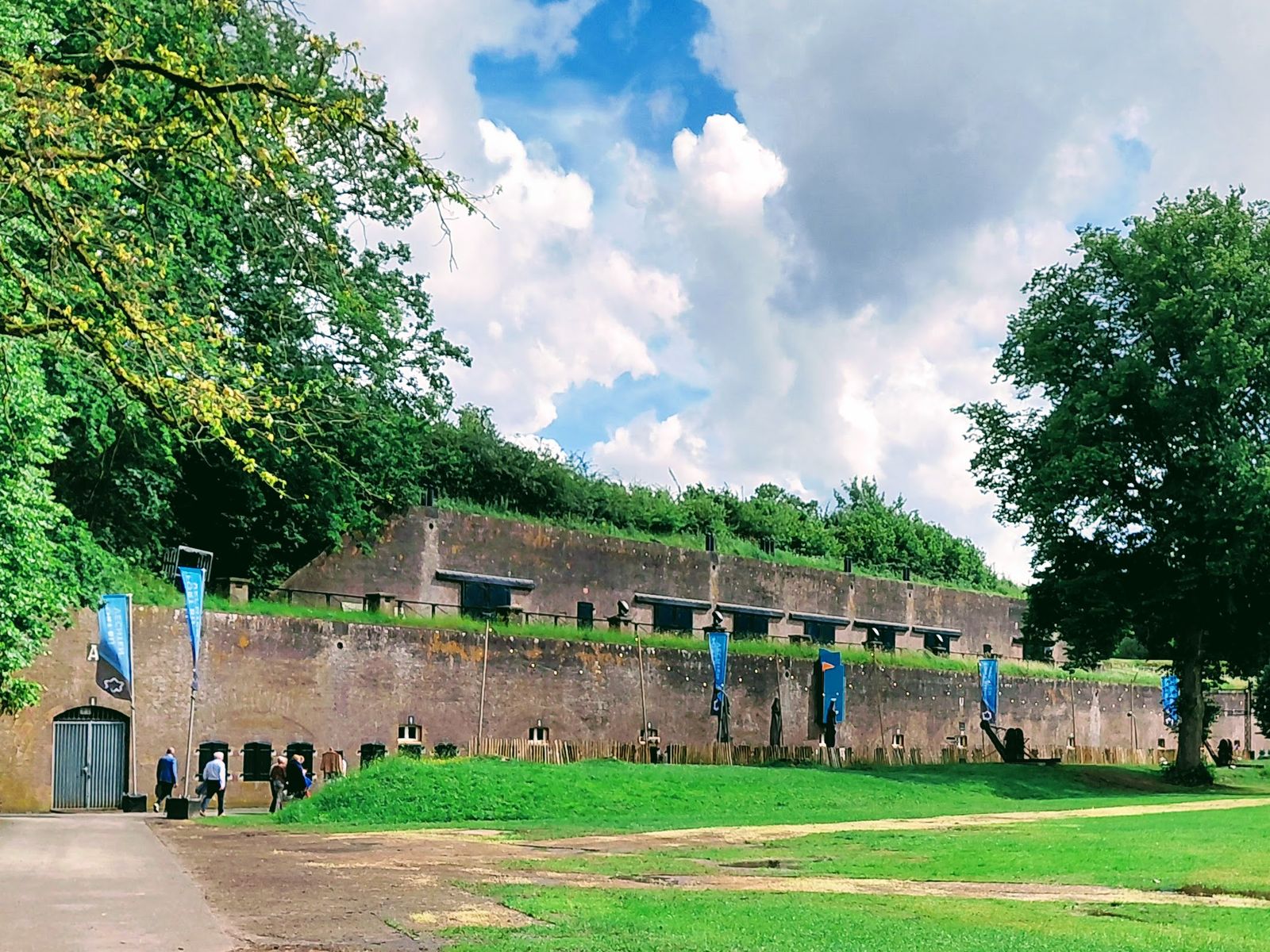
Dutch Water Defence Lines (UNESCO 759)
Cultural World Heritage in Netherlands (Kingdom of the), inscribed in 1996
The Dutch Water Defence Lines form a complete defence system that extends over 200 km along the edge of the administrative and economic heartland of Holland, consisting of the elongated New Dutch Waterline and the Defence Line of Amsterdam defensive ring. Built between 1815 and 1940, the system consists of an ingenious network of 96 forts, acting in concert with an intricate system of dikes, sluices, pumping stations, canals and inundation polders, and is a major example of a fortification based on the principle of temporary flooding of the land. Since the 16th century, the people in the Netherlands have used their special knowledge of hydraulic engineering for defence purposes. Each of the polders along the line of fortifications has its own inundation facilities.
The water level was a critical factor in the success of the Dutch Water Defence Lines; the water had to be too deep to wade through and too shallow for boats to sail on. Because the Dutch Water Defence Lines have continually been adapted to the development of defence techniques and knowledge of hydraulics, they offer a complete and unique insight in a 125-year period of military water management in combination with fortifications. The extraordinary consistency of the Strategically Deployed Landscape, Water Management System, and Military Fortifications is still clearly visible. The New Dutch Waterline contains well-preserved, extraordinary water management structures, including the first fan sluice, a type of sluice that was later used worldwide.
The Defence Line of Amsterdam includes forts that have an important place in the development of military engineering worldwide: they mark the shift from the conspicuous brick/stone casemated forts of the Montalembert tradition, in favour of the steel and concrete structures that were to be brought to their highest level of sophistication in the Maginot and Atlantic Wall fortifications. The combination of fixed positions with the deployment of mobile artillery to the intervals between the forts was also advanced in its application.