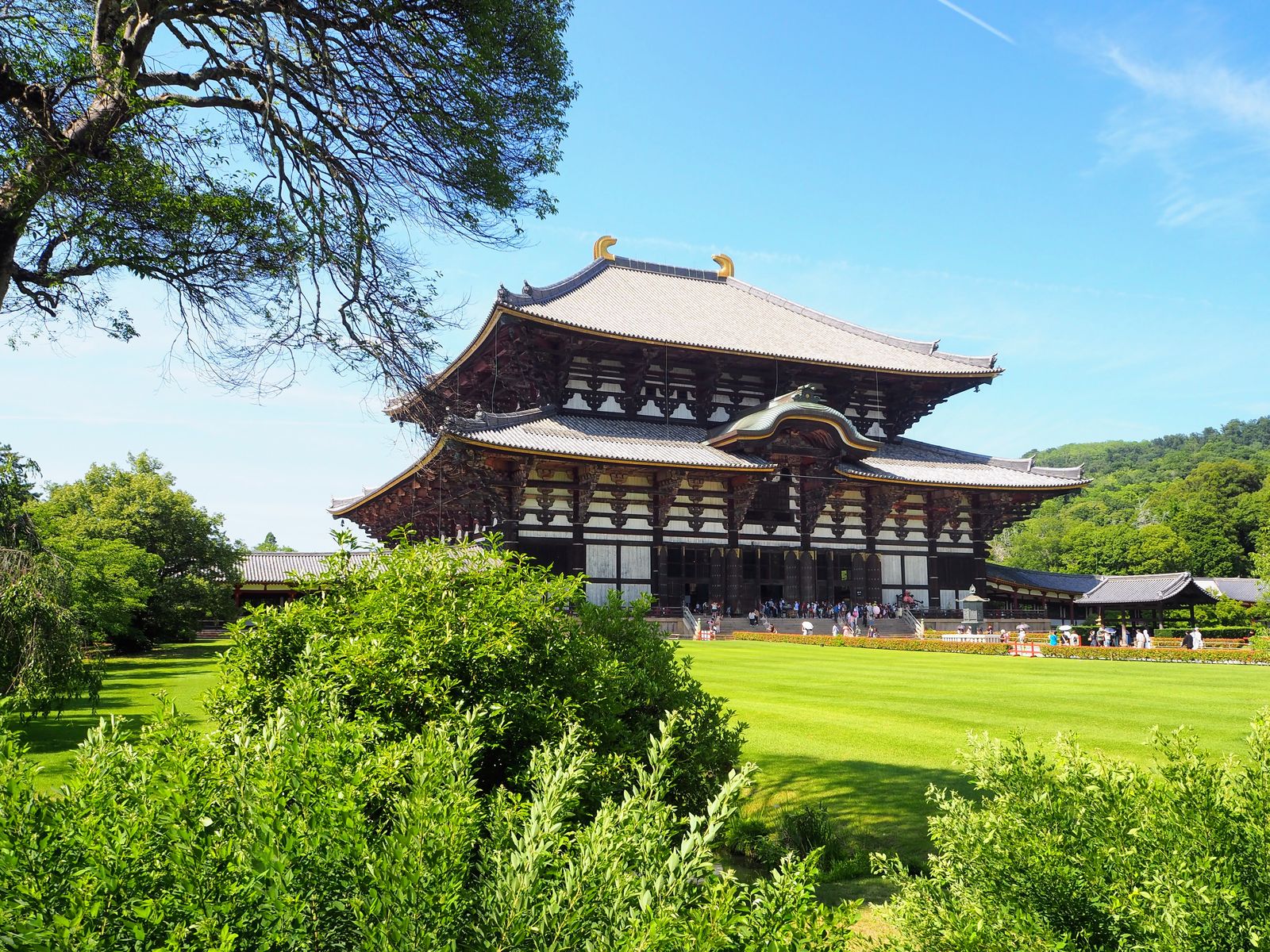
Historic Monuments of Ancient Nara (UNESCO 870)
Cultural World Heritage in Japan, inscribed in 1998
The Historic Monuments of Ancient Nara bear exceptional witness to the evolution of Japanese architecture and art and vividly illustrate a critical period in the cultural and political development of Japan, when Nara functioned as its capital from 710 to 784. During this period, the framework of national government was consolidated and Nara enjoyed great prosperity, emerging as the fountainhead of Japanese culture. Located in the modern city of Nara, the property includes eight component parts composed of seventy-eight different buildings covering 617.0 ha, which is surrounded by a buffer zone (1,962.5 ha) and the “historic environment harmonization area (539.0 ha)”. The site of Heijô-kyô was carefully selected in accordance with Chinese geomantic principles.
A grand city plan, based on Chinese examples such as Chang'an, was laid out, with palaces, Buddhist temples, Shinto shrines, public buildings, houses, and roads on an orthogonal grid. The palace itself, located at the northern end of the central avenue, occupied 120 ha. It comprised the official buildings where political and religious ceremonies took place, notably the Daigokuden (imperial audience hall) and Chôdô-in (state halls), and the imperial residence (Dairi), together with various compounds for administrative and other purposes. The component parts include an archaeological site (the Nara Palace Site), five Buddhist temples (the Tôdai-ji, the Kôfuku-ji, the Yakushi-ji, the Gangô-ji and the Tôshôdai-ji), a Shinto shrine (the Kasuga-Taisha) and an associative cultural landscape (the Kasugayama Primeval Forest), the natural environment which is an integral part of all Shinto shrines.
Together, these places provide a vivid and comprehensive picture of religion and life in the Japanese capital in the 8th century, a period of profound political and cultural change.
Criterion (ii): The historic monuments of ancient Nara bear exceptional witness to the evolution of Japanese architecture and art as a result of cultural links with China and Korea which were to have a profound influence on future developments. Criterion (iii): The flowering of Japanese culture during the period when Nara was the capital is uniquely demonstrated by its architectural heritage. Criterion (iv): The layout of the Imperial Palace and the design of the surviving monuments in Nara are outstanding examples of the architecture and planning of early Asian capital cities. Criterion (vi): The Buddhist temples and Shinto shrines of Nara demonstrate the continuing spiritual power and influence of these religions in an exceptional manner.