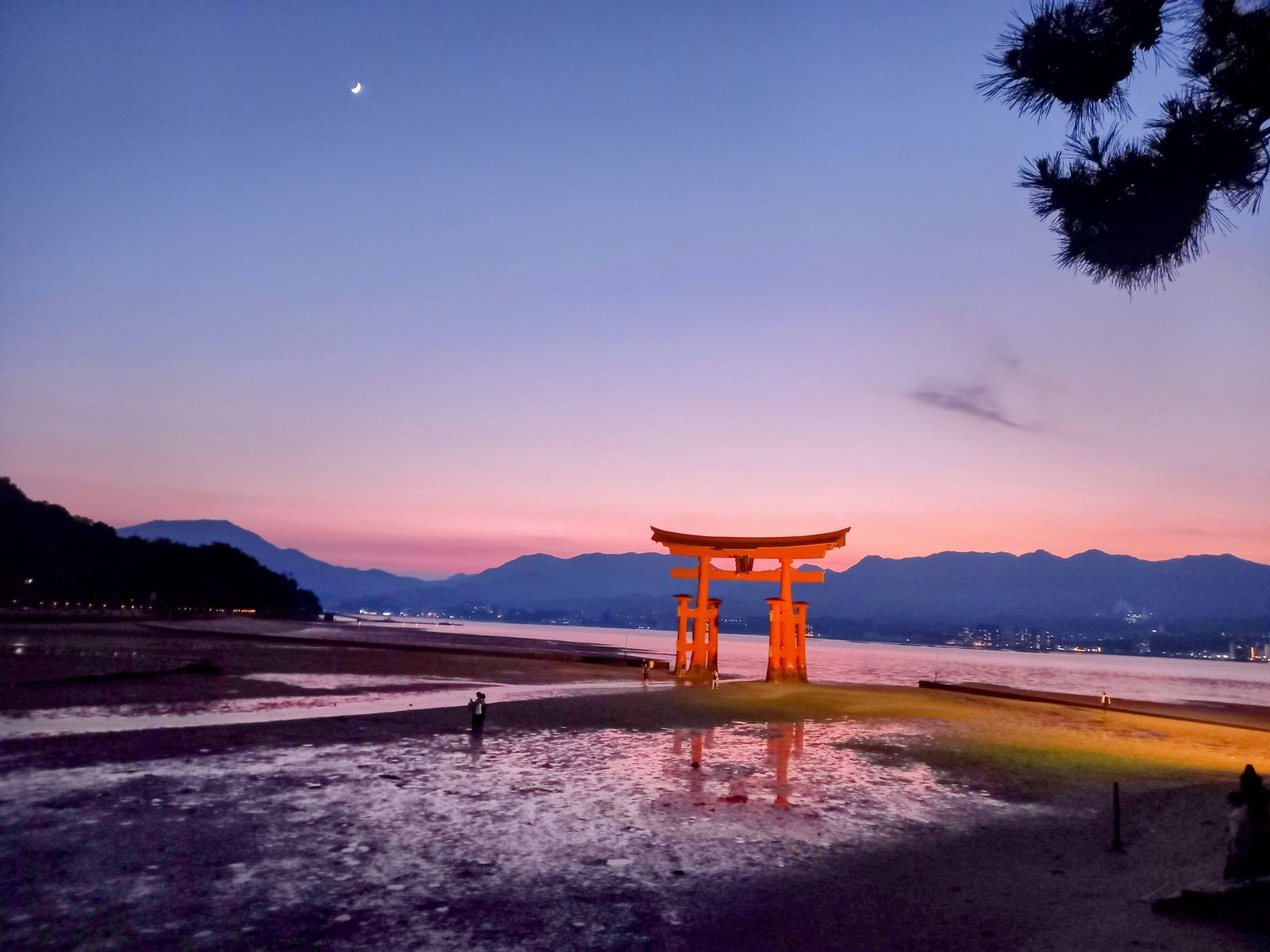
Itsukushima Shinto Shrine (UNESCO 776)
Cultural World Heritage in Japan, inscribed in 1996
The Island of Itsukushima, in the Seto inland sea, has been a holy place of Shintoism since the earliest times. The first shrine buildings here were probably erected in the 6th century. The present shrine dates from the 13th century but is an accurate reflection of the12th century construction style and was founded by the most powerful leader of the time, Taira no Kiyomori. The property covers 431.2 hectares on the Island of Itsukushima, and the buffer zone (2,634.3 ha) includes the rest of the island and part of the sea in front of Itukushima-jinia.
The property comprises seventeen buildings and three other structures forming two shrine complexes (the Honsha complex forming the main shrine, and Sessha Marodo-jinja complex) and ancillary buildings as well as a forested area around Mt. Misen. The buildings of Itsukushima-jinja are in the general tradition of Japanese Shinto architecture, in which a mountain or natural object becomes the focus of religious belief to be worshipped from a shrine, generally constructed at the foot of the mountain. The harmoniously arranged shrine buildings in the property are located on the sea and the scenery, with a trinity composed of the man-made architecture in the centre, the sea in the foreground, and the mountains in the background, and have become recognized as a Japanese standard of beauty.
The sites reveal great artistic and technical skill and are unique among extant shrine buildings in Japan. The shrine is an outstanding and unique architectural work which combines manmade achievements and natural elements. It is tangible proof of the great achievements of Taira no Kiyomori. Even though the buildings of Itsukushima-jinja have been reconstructed twice, this was done in a scrupulously accurate manner preserving the styles that prevailed from the late 12th century to the early 13th century.
The property is a Shinto shrine, a religion which centres on polytheistic nature worship, the origin of which goes back to primitive times. Over its long history, it has developed into a religion which became unique in the world, adopting continental influences to combine with its own indigenous traditions. Japanese spiritual life is deeply rooted in this religion.
The Committee decided to inscribe the nominated property on the basis of cultural criteria (i), (ii), (iv) and (vi) as the supreme example of this form of religious centre, setting traditional architecture of great artistic and technical merit against a dramatic natural background and thereby creating a work of art of incomparable physical beauty.