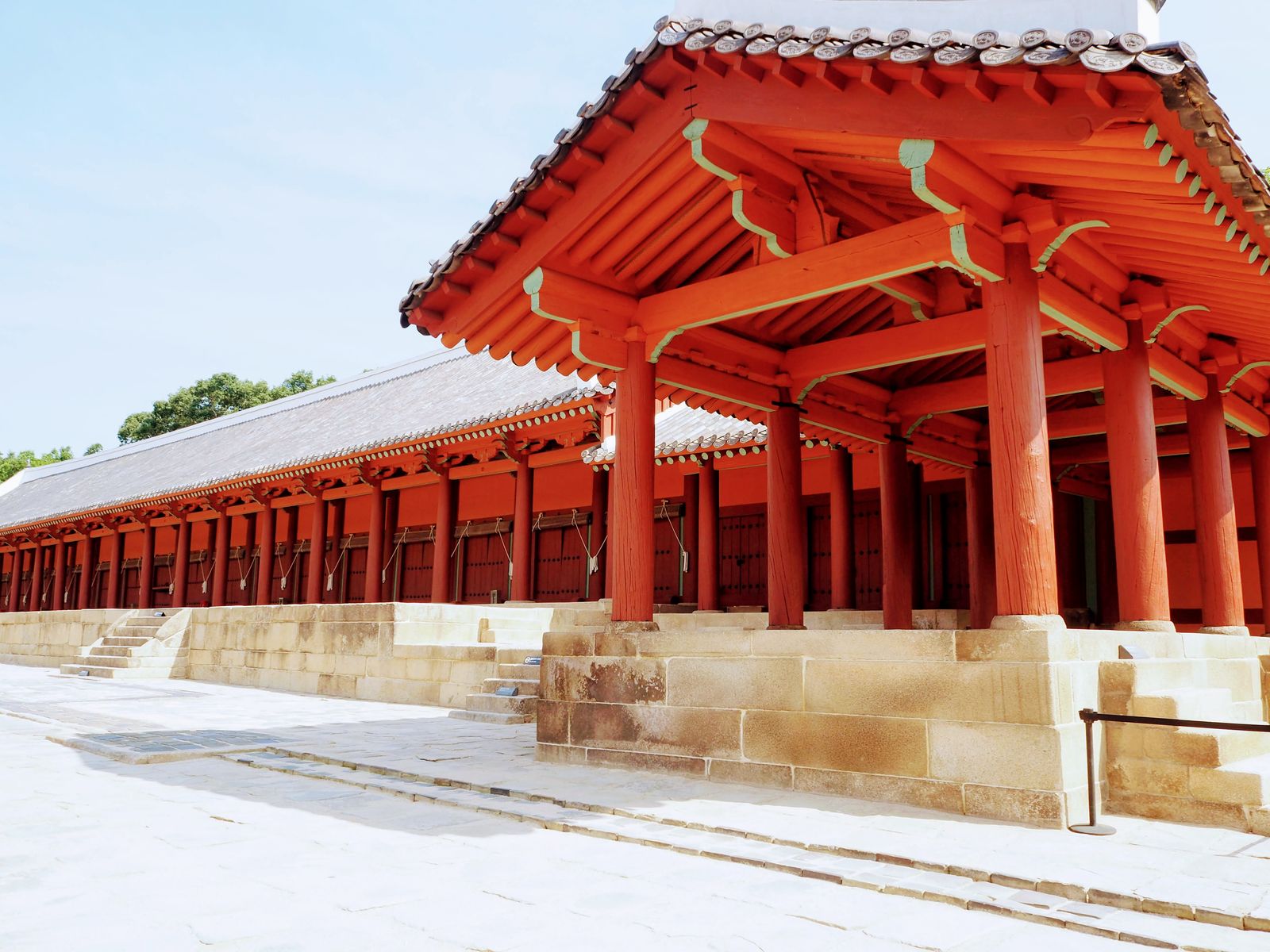
Jongmyo Shrine (UNESCO 738)
Cultural World Heritage in Republic of Korea, inscribed in 1995
Jongmyo is a shrine housing the spirit tablets of the former kings and queens of the Joseon Dynasty. The shrine is a symbolic structure that conveys the legitimacy of the royal family, where the king visited regularly to participate in the ancestral rites to wish for the safety and security of the people and state. Jongmyo is the oldest and most authentic of the Confucian royal ancestral shrines, with a unique spatial layout that has been preserved in its entirety. It was originally built in the late 14th century, but was destroyed during the Japanese invasion during the 16th century, and was rebuilt in the early 17th century with a few expansions made to the buildings thereafter.
Jongmyo and its grounds occupy a 19.4 ha oval site. The buildings are set in valleys and surrounded by low hills, with artificial additions built to reinforce the site’s balance of natural elements, in accordance with traditional pungsu principles. The main features of Jongmyo are Jeongjeon (the main shrine), and Yeongnyeongjeon (the Hall of Eternal Peace, an auxiliary shrine). Other features include Mangmyoru, a wooden structure where the king thought about the ancestral kings in memory; Gongmingdang, the shrine to the Goryeo King Gongmin, built by the Joseon King Taejo; Hyangdaecheong, the storage building for ritual utensils; and Jaegung, a main hall with two wings, where the King and participants waited for the rites to take place.
Jongmyo was built faithfully abiding by the Confucian ideology of ancestral worship and its ritual formalities under strict royal supervision, and still maintains its original form dating from the Joseon Dynasty. Traditions of ancestral worship rites – Jongmyo Jerye, are still carried out, together with the accompanying ritual music and dance performance. Construction and management of Jongmyo, and the operations of Jongmyo Jerye rituals, are all meticulously recorded in the royal protocols of the Joseon Dynasty.