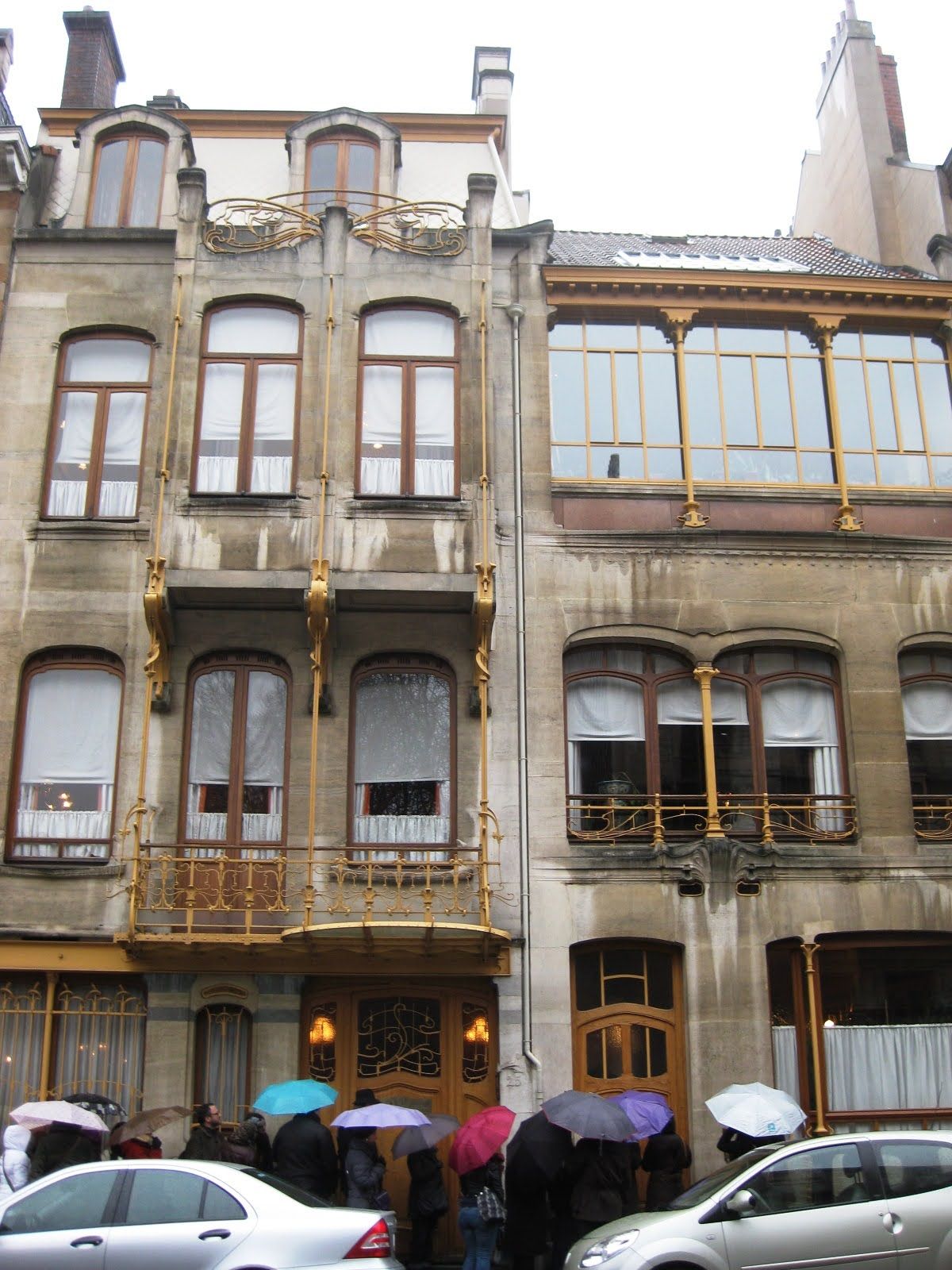
Major Town Houses of the Architect Victor Horta (Brussels) (UNESCO 1005)
Cultural World Heritage in Belgium, inscribed in 2000
The Major Town Houses of the Architect Victor Horta – Hotel Tassel (1893), Hotel Solvay (1894), Hotel van Eetvelde (1895) and the House and Workshop of Victor Horta – located in Brussels, are outstanding examples of Art Nouveau. These four houses, that bear testimony to the immense talent of this Belgian architect, achieve a remarkable sense of unity with meticulous attention to the smallest detail of the building, from the door handle or bell to the least piece of furniture. Horta, one of the earliest instigators, heralded the modern movement of Art Nouveau architecture. The stylistic revolution represented by these works is characterised by their open plan, diffusion and transformation of light throughout the construction, the creation of a decor that brilliantly illustrates the curved lines of decoration embracing the structure of the building, the use of new materials (steel and glass) and the introduction of modern technical utilities.
Through the rational use of the metallic structures, often visible or subtly dissimulated, Victor Horta conceived flexible, light and airy living areas, directly adapted to the personality of their inhabitants. The principle of a double house connected by a glass-covered circulation area is adopted for the Hotel Tassel and the Hotel van Eetvelde. This area, that generally contains a winter garden, is enchantingly represented at the Hotel Solvay, the most ambitious and spectacular work of Horta in the Art Nouveau period. The staircase of its house-workshop is decorated and enjoys this type of particularly elegant arrangement.
The interior decors benefitted from surprising inventiveness, with the motifs flowing smoothly from the mosaic floor to the painted walls, including the wrought iron work and the custom furniture. These four houses revived the tradition of the Bourgeois houses and private mansions of the 19th century, combining residential and representational functions which require a subtle organization of spaces and differentiated circulation. Revisited by the creative genius of Victor Horta, each one of them represents the personality of their owners and forms a coherent ensemble that illustrates the willingness to treat the architecture and decoration as a whole.
Criterion (i): The Town Houses of Victor Horta in Brussels are works of human creative genius, representing the highest expression of the influential Art Nouveau style in art and architecture.
Criterion (ii): The appearance of Art Nouveau in the closing years of the 19th century marked a decisive stage in the evolution of architecture, making possible subsequent developments, and the Town Houses of Victor Horta in Brussels bear exceptional witness to its radical new approach.
Criterion (iv): The Town Houses of Victor Horta are outstanding examples of Art Nouveau architecture brilliantly illustrating the transition from the 19th to the 20th century in art, thought, and society.