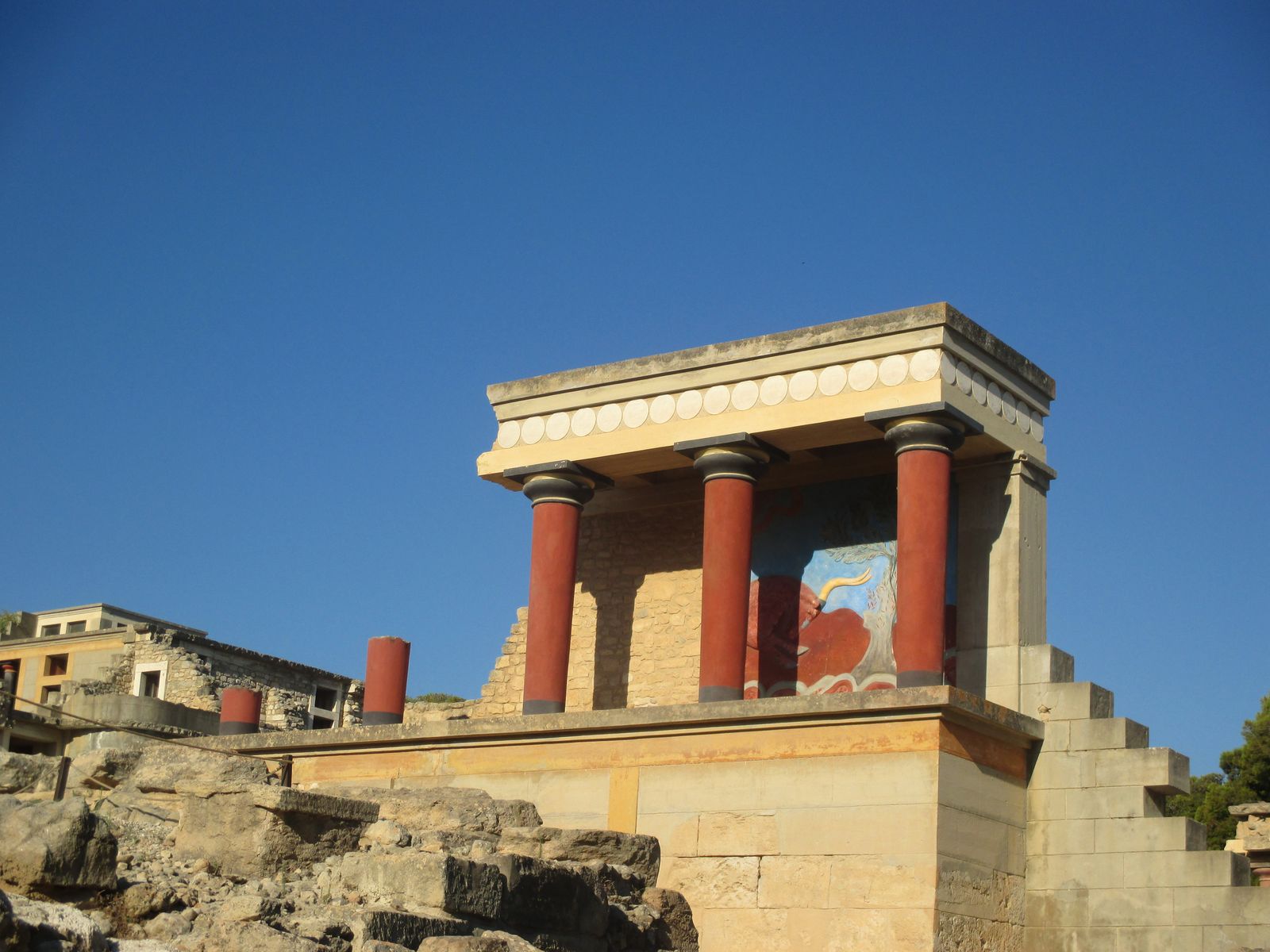
Minoan Palatial Centres (UNESCO 1733)
Cultural World Heritage in Greece, inscribed in 2025
Minoan Palatial Centres consists of six archaeological sites (Knossos, Phaistos, Malia, Zakros, Zominthos and Kydonia) located on the island of Crete. Dating from 1900 BCE to 1100 BCE, they constitute the most representative expression of the Minoan Civilisation, which flourished in the Eastern Mediterranean over the course of two millennia (2800-1100 BCE), characterised by advanced social organisation, architectural ingenuity, and significant artistic achievements. The strategic position of Crete enabled it to serve as a cultural and economic bridge between Europe, Africa, and Asia, fostering innovation and trade. The Minoans, centred on Crete, emerged as a dominant maritime civilisation while developing a distinctive cultural identity.
The property highlights the zenith of their civilisation, covering all key aspects and phases of its development. Distributed across Crete, the palatial centres were central to Minoan society, functioning as administrative, economic, religious, and cultural hubs. The monumental architecture carefully adapted to the counters and characteristics of the natural landscape, with intricate internal organisation, advanced urban planning, and cultural innovations reflect a complex society. The sophistication of the Minoan architecture, the material evidence of early writing systems and of maritime networks and interactions of the Minoans with other Mediterranean cultures, as well as their mythological legacy, all have had a long-lasting cultural and intellectual influence on art and culture that continues to this day.