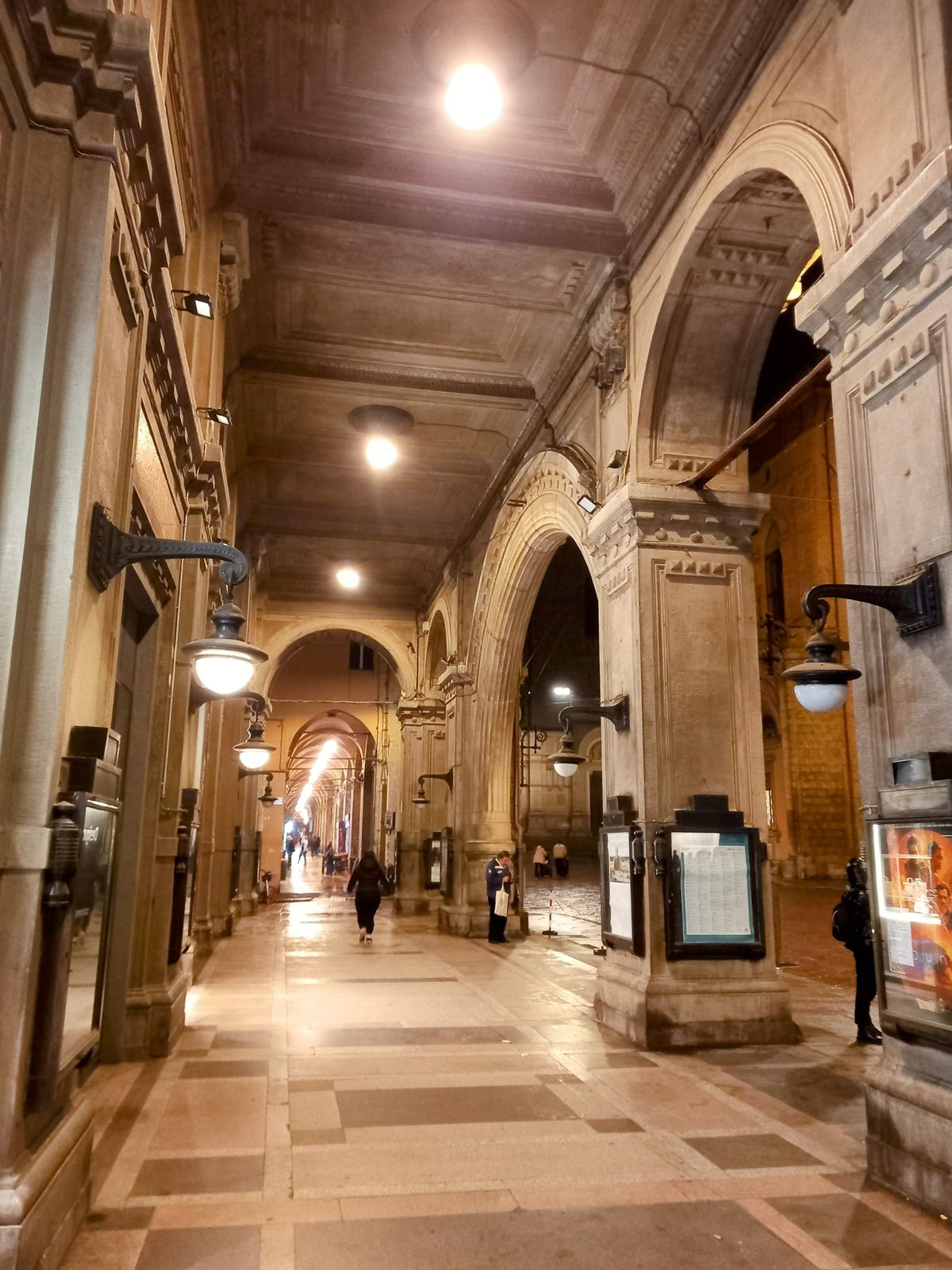
The Porticoes of Bologna (UNESCO 1650)
Cultural World Heritage in Italy, inscribed in 2021
The porticoes of Bologna are a selection of 12 porticoes that reflect the different architectural typologies found in the overall 62km of Bologna’s porticoed pathways, the largest porticoe system in the world. The 12 component parts enshrine the typologies, architectural features, urban and social functions that characterized the progressive enlargement of porticoed pathways, in both central and peripheral areas of the city, with the sustained renewal of a centuries old tradition launched with the 1288 Statute. The public portico, as a model of a particularly active social life at any time and in any climatic condition, is a very ancient model typology, an element adopted for centuries throughout the world. It finds in Bologna an exceptional and complete representation from the chronological, typological and functional point of view.
It is an architectural model but also a social one, a place of integration and exchange, in which the main protagonists of the city (citizens, migrants and students) live and share time and ideas, relationships and thoughts. It is a reference point for a sustainable urban lifestyle, where civil and religious spaces and residences of all social classes are perfectly integrated: a place of continuous interchange of human values that permeates and shapes city life. This is the reason for which people who passed by Bologna over the centuries have appreciated and praised the portico, which is why the porticoed model was continuously exported elsewhere in Italy and Europe. The attributes that convey the Outstanding Universal Value of the property are: the complex of different porticoes typologies and their relationship with surrounding urban areas, the evolution of their form, design and materials, the public use of porticoes and their social function for a sustainable urban lifestyle, places of continuous interchange of human values, civil and religious, and the interconnections of the component parts with the wider porticoes system of covered walkways within the perimeter of the property.
In Bologna the porticoes are the exceptional result of an urban planning regulatory framework. This regulatory framework has favoured the creation of an architectural typology that has developed in various peculiar ways in the city of Bologna over the course of nine centuries. The persistence of the legislation regulates the protection, conservation, use and management of the porticoes. Finally, these covered spaces, which still remain private property for public use, have developed social and community significance.
For these characteristics, the community, but also the visitors, have recognized and still recognize today the porticoes as an identifying feature of the city.