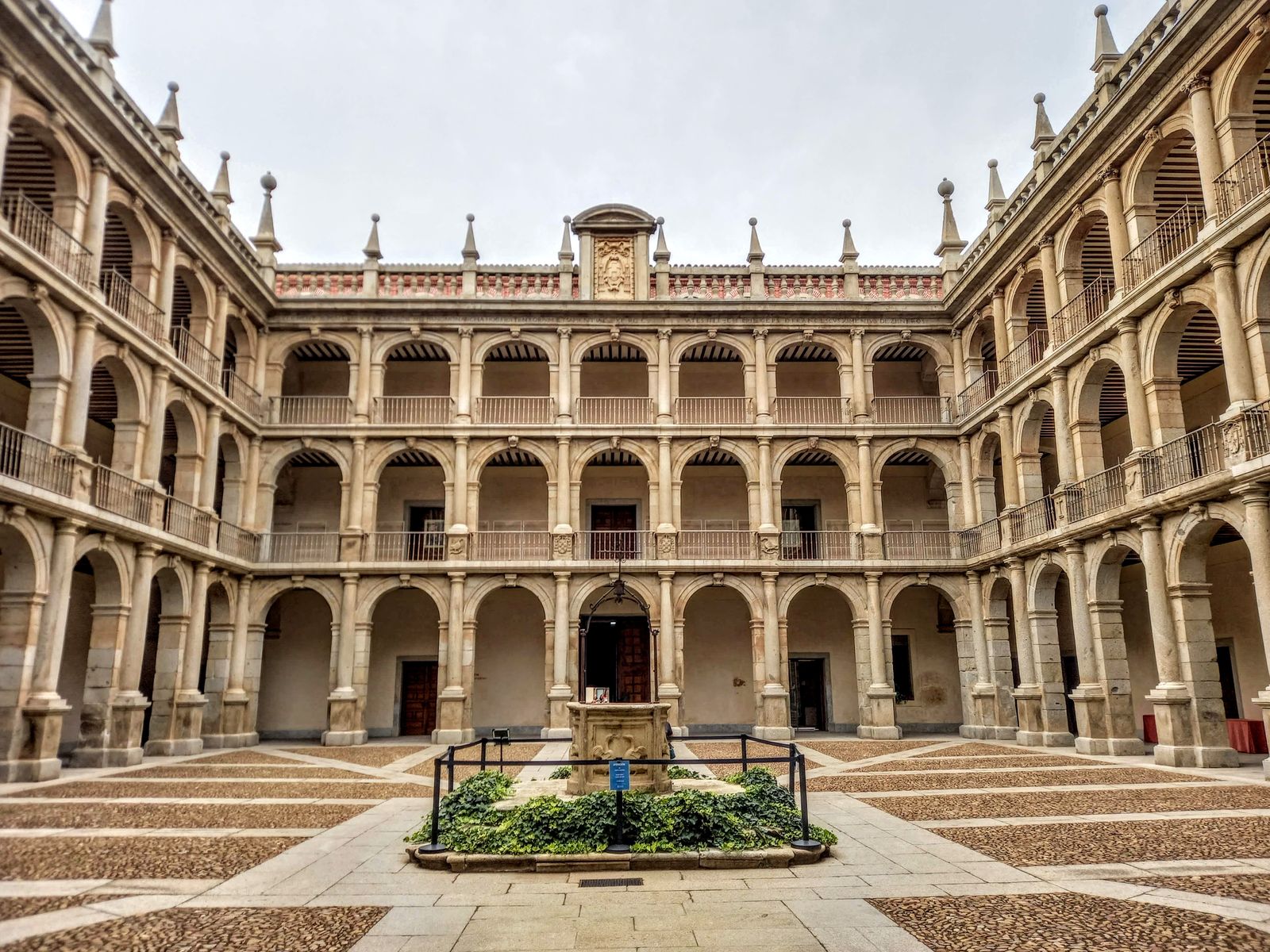
University and Historic Precinct of Alcalá de Henares (UNESCO 876)
Cultural World Heritage in Spain, inscribed in 1998
University and Historic Precinct of Alcalá de Henares is located in the Autonomous Community of Madrid, 30 km from the capital city of Madrid. The property covers an area of 79 ha and includes a magnificent complex of historic buildings, such as the exceptional Colegio Mayor de San Idelfonso or the Monastery of St Bernard. The University Precinct begins at the Plaza Cervantes (the former Plaza Mayor) and extends to the east of the medieval city. It was enclosed by demolishing part of the earlier medieval walls and prolonging them around the new urban development.
The layout is based on humanist planning principles, with two main axes and a central place (nowadays Plaza de San Diego) where the main University buildings are located. The walled medieval precinct has the Iglesia Magistral (Cathedral) at its core, from which the street network radiates, merging into the former Jewish and Arab quarters. To the north-west is the ecclesiastical precinct, surrounded by its own walls; at its heart is the Archbishop’s Palace. Within the historic centre there are several protected buildings under the Spanish legislation.
The city has its origins in the Roman town of Complutum. It expanded during the Middle Ages and flourished in the 16th century thanks to the foundation of the University. The concept of this city, its planning and provisions, belong to the project designed by the University’s founder, Cardinal Cisneros. He had bought land in the east of the medieval city with the aim of providing the necessary infrastructures to carry out his university project, a project that included colleges, halls of residence, hospitals and printers, all of which contributed to the University of Alcalá’s outstanding intellectual achievement for hundreds of years.
Juxtaposed with the medieval town, this new city was converted into an exceptional model that embodied the Augustinian model of the City of God, as well as to the way it was planned and the buildings it was endowed with. The dream of the Civitas Dei became a reality, reaching the highest levels of intellectual achievement of the era in the sciences, language and literature, personified by its most illustrious son, Miguel de Cervantes through his universal work ‘Don Quixote’. Alcalá de Henares was designed with the strict purpose of being the seat of a university. It was the first city of this kind in history and it became a University City model for the Americas and Europe.
Alcalá exported its prestige and its form of organization: a microcosm where religious orders, the town citizens, the academic world, education and knowledge all lived together. It is also a unique example of the architecture pertaining to the House of Austria, characteristic in the centre of Spain during the Baroque period.
Criterion (ii): Alcalá de Henares was the first city to be designed and built solely as the seat of a university, and was to serve as the model for other centres of learning in Europe and the Americas.
Criterion (iv): The concept of the ideal city, the City of God (Civitas Dei), was first given material expression in Alcalá de Henares, from where it was widely diffused throughout the world.
Criterion (vi): The contribution of Alcalá de Henares to the intellectual development of humankind finds expression in its materialization of the Civitas Dei, in the advances in linguistics that took place there, not least in the definition of the Spanish language, and through the work of its great son, Miguel de Cervantes Saavedra and his masterpiece, Don Quixote.