TEOTIHUACAN & MEXICO CITY
Two UNESCO World Heritage Sites reachable by public bus from the capital — pyramid city and colonial waterways
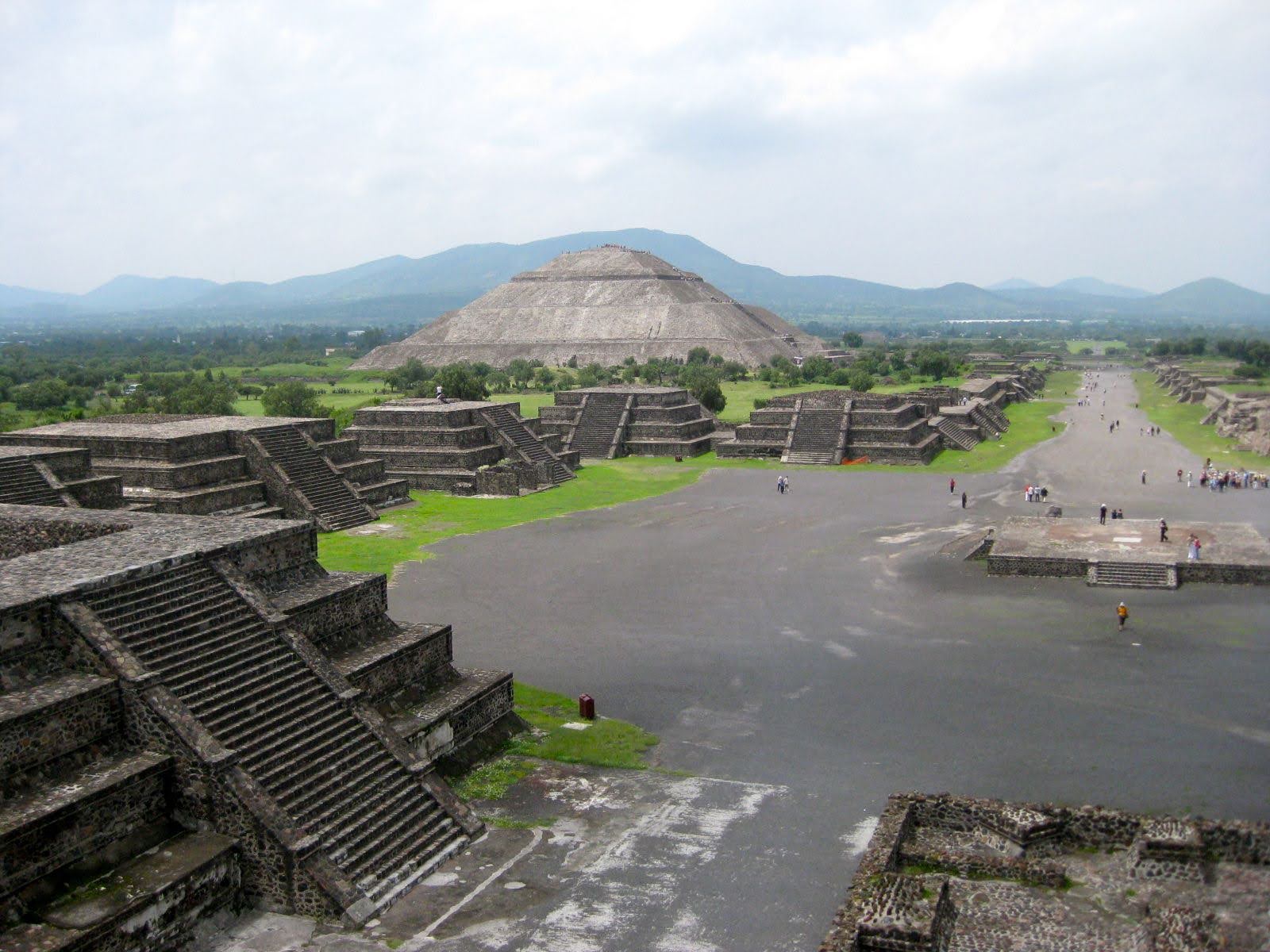
Teotihuacan is the undisputed highlight of this double-site entry. Located around 50 kilometres north-east of Mexico City, it was the largest city in pre-Columbian Americas at its peak — a metropolis of perhaps 125,000 people constructed from approximately the 1st century BCE. Its scale and urban order are staggering: a formal grid layout, massive ceremonial boulevards, and two of the largest pyramidal structures ever built by human hands.
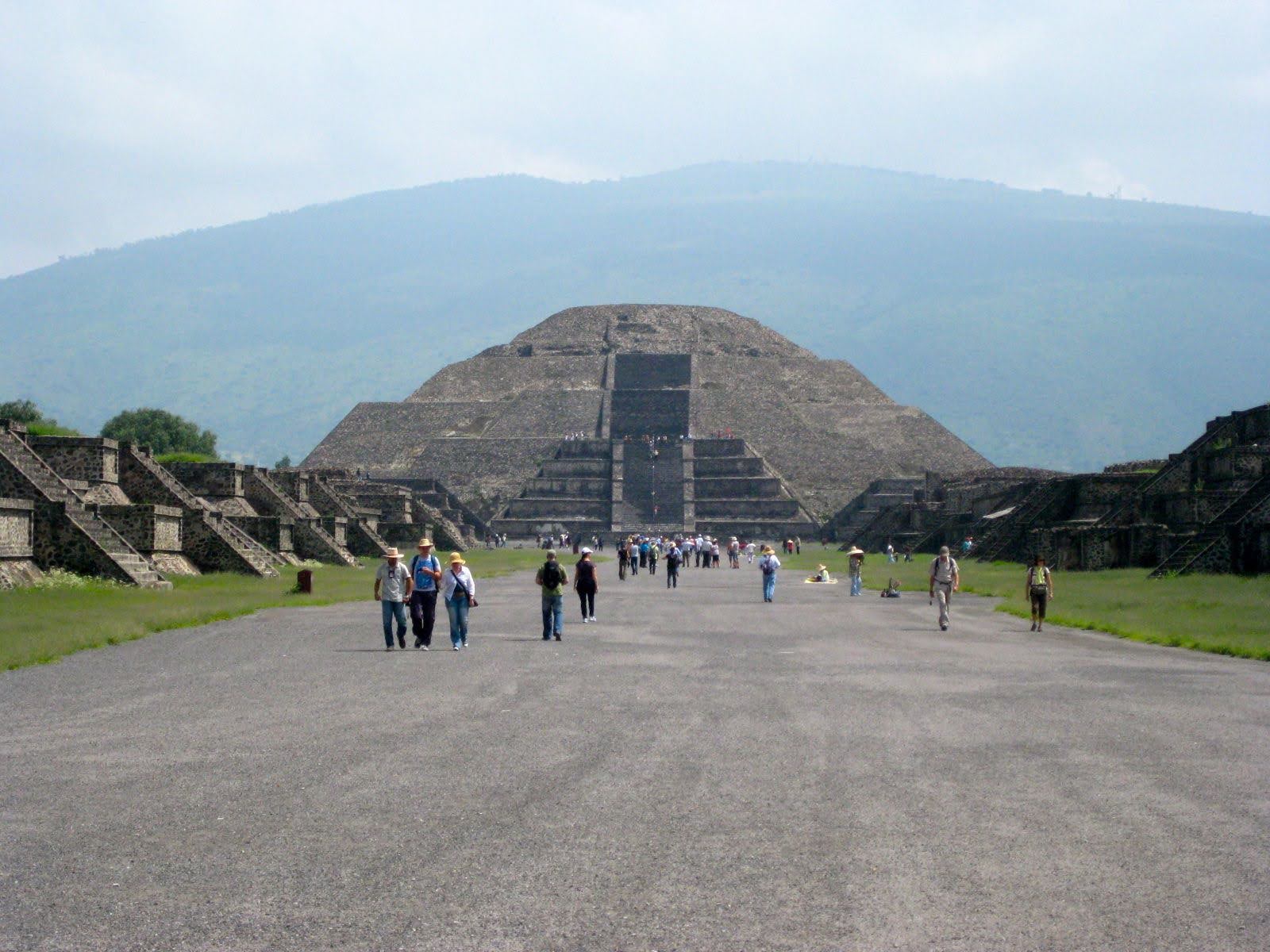
The central axis, the Avenue of the Dead, runs for several kilometres through the site and anchors the spatial logic of the entire city. Walking its length is a genuine experience of ancient urban planning at civilisational scale. At the northern end stands the Pyramid of the Moon, flanked by platforms and secondary structures. Dominating the eastern side of the Avenue is the Pyramid of the Sun, rising to 65 metres — the third-largest pyramid in the world. The views from its summit across the valley, with the mountains forming the horizon and the city ruins laid out below, are among the most impressive in Mesoamerican archaeology.
The southern complex, the Citadel (La Ciudadela), contains the Temple of the Feathered Serpent (Quetzalcoatl), decorated with carved serpent heads and jade-green feathered reliefs. This is often less crowded and no less impressive than the main pyramids.
The site also includes a well-developed museum near the south entrance with reconstructed murals, artefacts, and scale models that help contextualise the sheer scope of what you are walking through. Allow at least 3–4 hours; in a full day you could explore calmly and still visit the museum.
One of the most satisfying aspects of visiting Teotihuacan is that it is entirely reachable by public urban transport. No tour, private transfer, or expensive taxi is required. The journey involves two bus connections and takes around 1.5 hours each way — but it is straightforward, cheap, and feels like a genuinely local experience rather than a packaged excursion.
The classic route departs from the Terminal Central del Norte (North Bus Terminal), Mexico City's main long-distance bus station on Insurgentes Norte. From the city centre or the Zócalo, take the metro to the Autobuses del Norte metro station (Line 5, yellow), which deposits you directly at the terminal. From there, Autobuses Teotihuacan operates direct services to the site — buses run frequently and the journey to the archaeological zone entrance takes approximately one hour from the terminal. The total journey from central Mexico City is roughly 1.5 hours including the metro segment.
Return buses leave from outside Gate 1 of the site. The buses are local, inexpensive, and run through the afternoon. Last departures are typically in the early evening, so plan your exit accordingly.
| Time block | Segment | Transport | Practical note |
|---|---|---|---|
| ~07:30–08:00 | Hotel / centre → Autobuses del Norte metro station | Metro Line 5 (yellow) | Direct connection; buy metro card at any station. Allow 30–40 min from Zócalo area. |
| ~08:00–09:00 | Terminal Norte → Teotihuacan Gate 1 | Autobuses Teotihuacan (direct bus) | Buses depart frequently from Terminal Norte. Buy ticket at the counter. Journey approx. 1 hour. |
| ~09:00–13:00 | Teotihuacan site visit | Walking | Avenue of the Dead, Pyramid of the Sun, Pyramid of the Moon, Citadel. 3–4 hours minimum; museum on site worth 30 minutes extra. |
| ~13:00–14:00 | Lunch at site entrance | On-site restaurants | Several restaurants near Gate 1; Mexican standards, reasonable prices. |
| ~14:00–15:00 | Teotihuacan Gate 1 → Terminal Norte | Return bus | Buses depart from Gate 1 area. Last afternoon departures usually 17:00–18:00. |
| ~15:00–16:00 | Terminal Norte → city centre | Metro Line 5 | Return to central Mexico City. Evening free for historic centre exploration. |
The second UNESCO entry is a composite site that covers the historic centre of Mexico City itself — built atop the ruins of the Aztec capital Tenochtitlan — and the remarkable water-garden network of Xochimilco, located in the southern borough of the city.
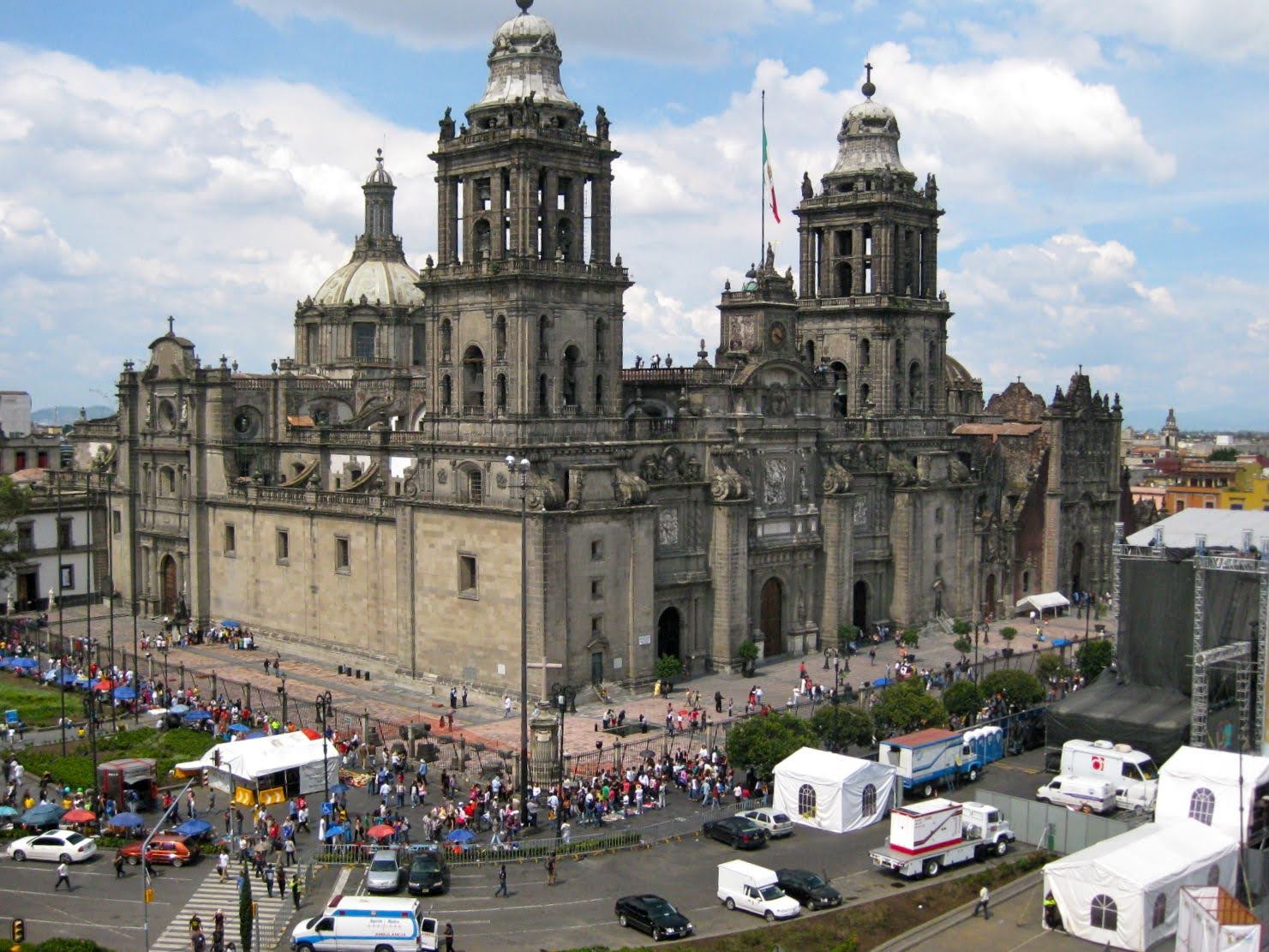
The Historic Centre around the Zócalo (Plaza de la Constitución) is one of the largest colonial squares in the Americas. Surrounding it are the Metropolitan Cathedral (built over three centuries from 1573 to 1813), the National Palace with Diego Rivera's famous murals covering the history of Mexico, and the partially excavated ruins of the Templo Mayor — the great pyramid-temple of the Aztecs, found literally beneath the city streets and now an open archaeological site. Walking between these layers of history — Aztec foundations, colonial baroque, and the living city — is genuinely extraordinary.
Xochimilco is a different kind of experience: a surviving network of chinampas (artificial agricultural islands) and canals inherited directly from the Aztec period. The classic way to visit is by hiring a trajinera — a brightly painted flat-bottomed boat — and drifting through the canals. Flower sellers, food vendors in their own boats, and mariachi groups paddle alongside. It feels festive and surreal. The chinampas remain productive agricultural plots, cultivated by local families using pre-Columbian methods.
Yes, entirely. Two public bus connections from the city centre — metro to Terminal Norte, then the direct Autobuses Teotihuacan service — covers the full route for a fraction of tour prices. The journey is about 1.5 hours and runs smoothly on weekdays. Weekends are busier but equally doable.
A thorough visit to the main Avenue of the Dead axis — including the Pyramid of the Moon, Pyramid of the Sun, and the Citadel — takes a minimum of 3 hours. Add 30–45 minutes for the on-site museum and you have a comfortable half-day to full-day outing. The site is large and fully exposed, so pace yourself.
Technically yes — Teotihuacan in the morning and the Zócalo area in the late afternoon/evening — but it makes for an exhausting and rushed day. Better to dedicate a full day to Teotihuacan and a separate half-day or full day to the historic centre, Templo Mayor, and Xochimilco.
Yes, and it offers something genuinely different from the pyramid sites. The canal boat experience is festive and unique — especially on weekends when local families hire trajineras, floating food vendors paddle alongside, and the atmosphere is almost carnivalesque. On weekdays it is quieter and more contemplative. Either way, it is unlike anything else in the city.
Early morning (08:00–11:00) before the full heat builds and before the main tour buses arrive. The dry season (October–April) is preferable, though altitude means temperatures are cooler year-round than you might expect. Avoid visiting during the spring equinox (around 21 March), when crowds are enormous and the site reaches maximum capacity.
The builders of Teotihuacan remain one of archaeology's great mysteries — the city predates the Aztecs by centuries and the identity of its founders is uncertain. It was inhabited from roughly the 1st century BCE, reached its peak population around 450 CE, and was mysteriously burned and largely abandoned around 550–650 CE. The Aztecs arrived centuries later, found the ruins, and named the place Teotihuacan — "the place where the gods were created" — believing it to be the site of divine creation.