UXMAL & CHICHÉN ITZÁ
Two Mayan UNESCO World Heritage Sites from Mérida in a single day — serene ruins at dawn, mass tourism at noon, and a cenote swim to end it all
Uxmal is one of the great surprises of Yucatán — a world-class Mayan archaeological site that draws only a fraction of the visitors that queue for Chichén Itzá, and is all the better for it. When we arrived in the morning the site was nearly empty. That quiet, combined with the architecture, made for an exceptional experience.
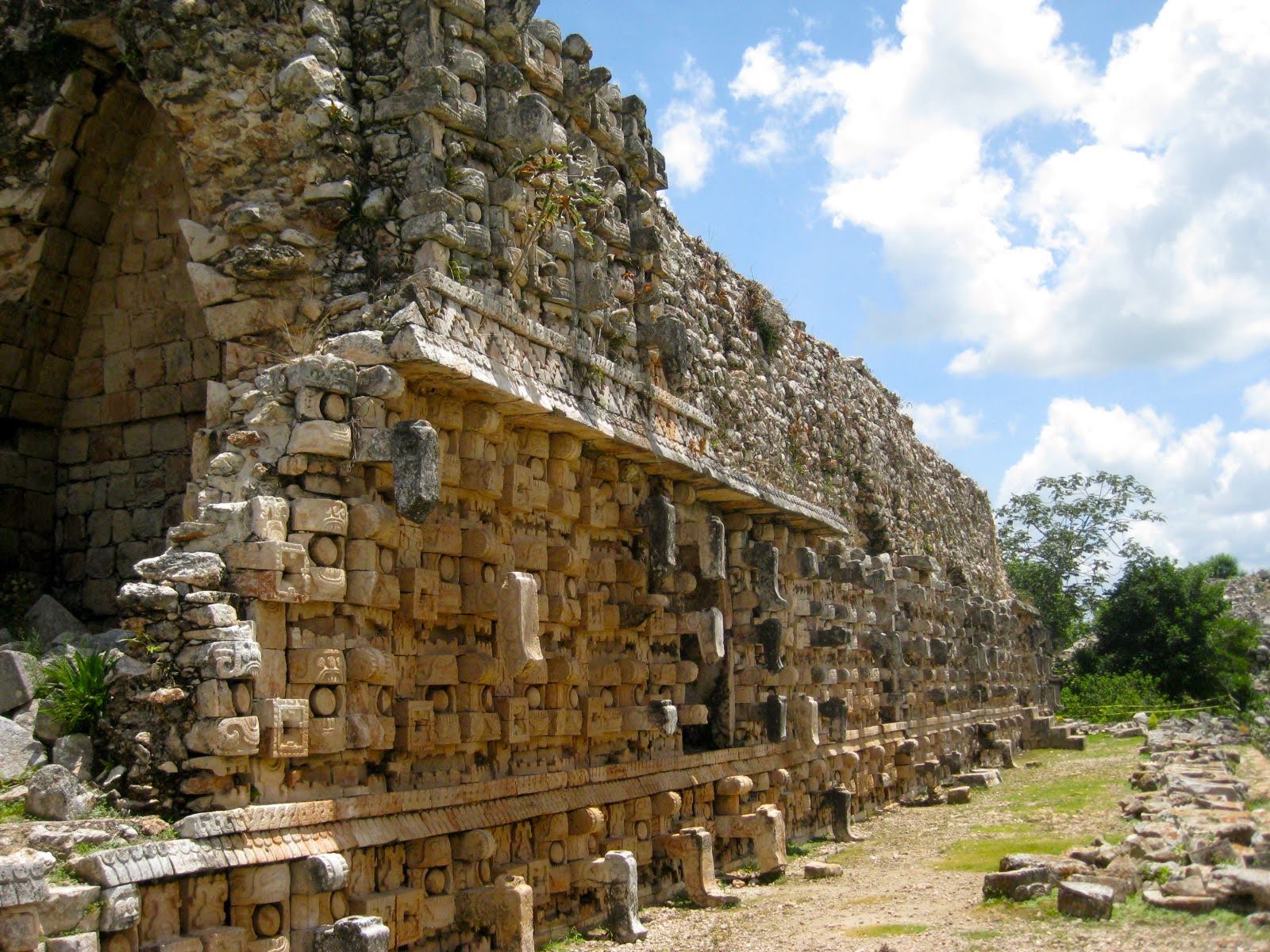
Built during the Late Classic period (approximately 600–1000 CE), Uxmal represents the apex of the Puuc architectural style — characterised by intricate stone mosaic facades, geometric patterns, masks of the rain god Chaac, and clean horizontal proportions that feel almost modernist in their refinement. This is not rough stone piled high; it is carved stone draped with mathematical precision.
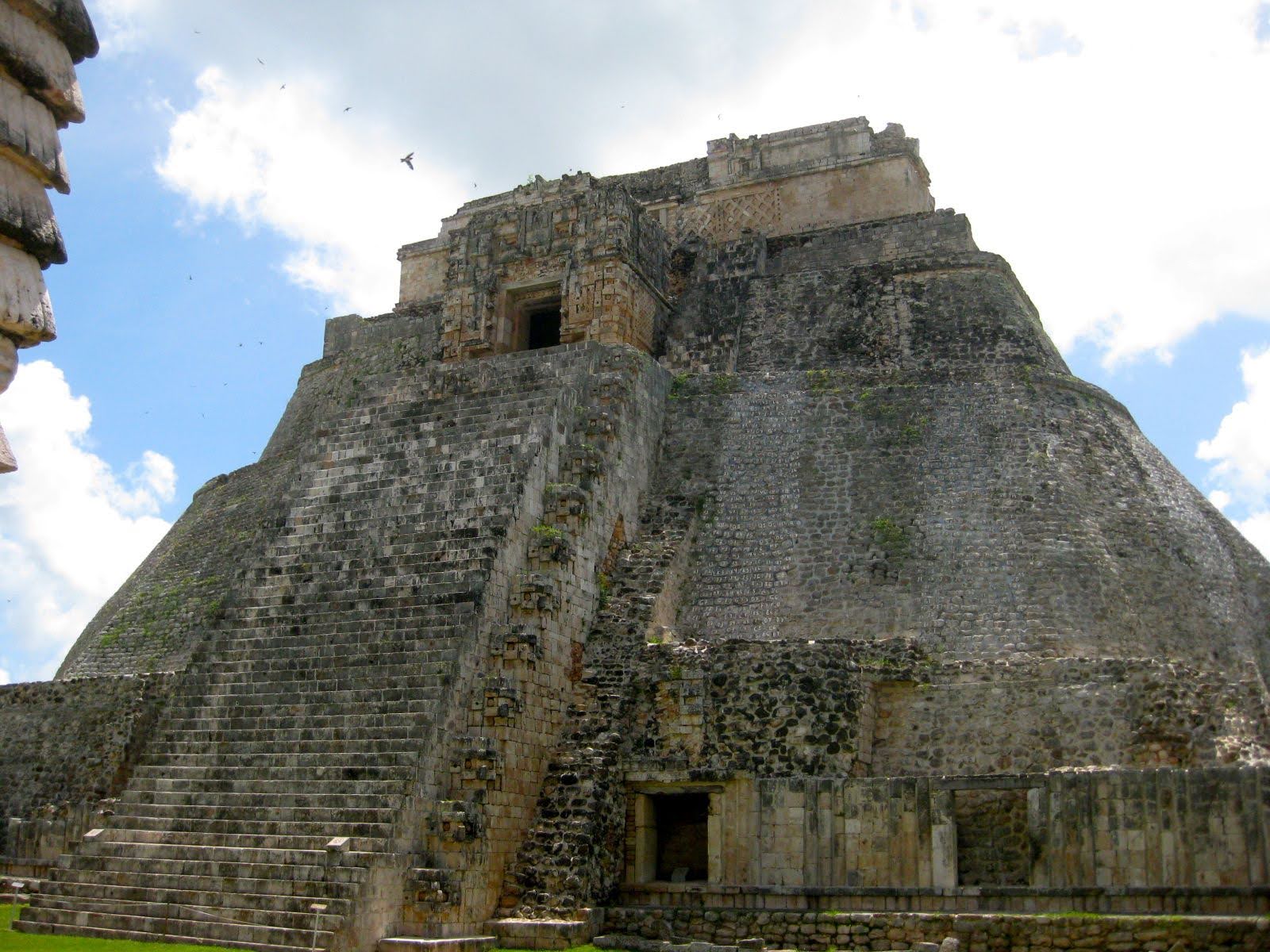
The centrepiece is the Pyramid of the Magician (Pirámide del Adivino), a strikingly steep elliptical pyramid unlike any other in Mesoamerica — its oval base and dramatically curved sides rise at an almost vertiginous angle. Facing it is the great Nunnery Quadrangle (Cuadrángulo de las Monjas), a large courtyard complex whose walls are entirely covered in stone mosaic decoration — lattices, serpents, Chaac masks stacked in towers at the corners, geometric bands layered across every surface. It is remarkable.
The Governor's Palace (Palacio del Gobernador), located on a raised platform to the south, is often cited by architects as one of the finest pre-Columbian buildings in the Americas. The frieze running its full 98-metre length is carved with thousands of stone pieces assembled into Chaac masks and geometric patterns — a construction project of staggering effort and refinement.
Without the noise of tour groups, Uxmal lets you actually sit with these spaces. We had the Nunnery Quadrangle largely to ourselves and were able to walk its perimeter in silence. This alone is worth rising early for.
Chichén Itzá is one of the New Seven Wonders of the World, a UNESCO site, and — by the time we arrived in the afternoon — one of the most densely visited pieces of archaeology anywhere on the planet. The contrast with Uxmal's silence was total and slightly shocking.
The crowds are almost entirely day-trippers from the resort strip. Cancún, Playa del Carmen, Tulum, and the entire Riviera Maya send buses of all-inclusive tourists to Chichén Itzá every morning; by midday the site is heaving with people in matching wristbands, following guides with raised umbrellas, buying obsidian figurines and replica warrior heads from the dense vendor corridor that runs between the car park and the site entrance. It is tourism as spectacle.
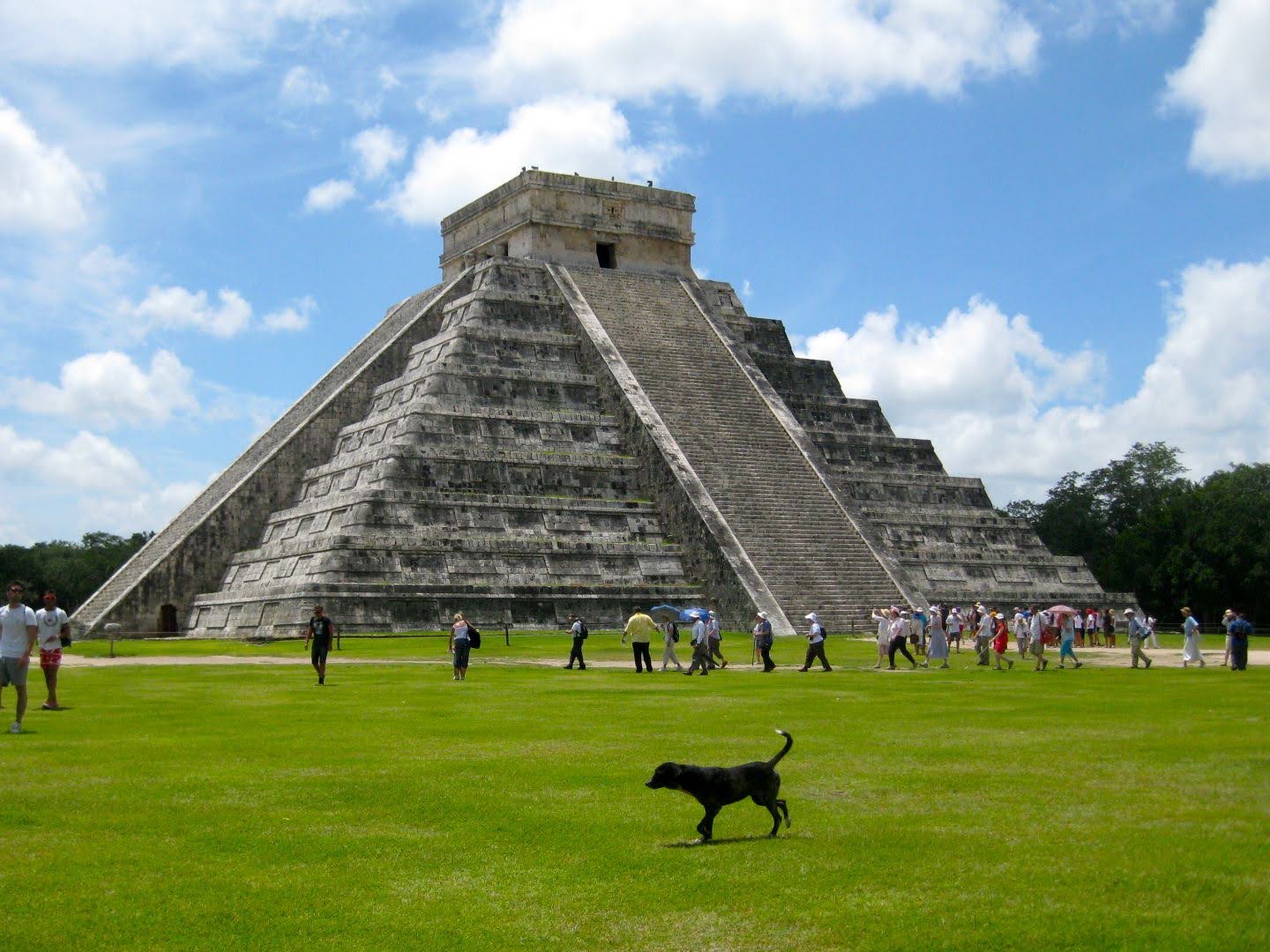
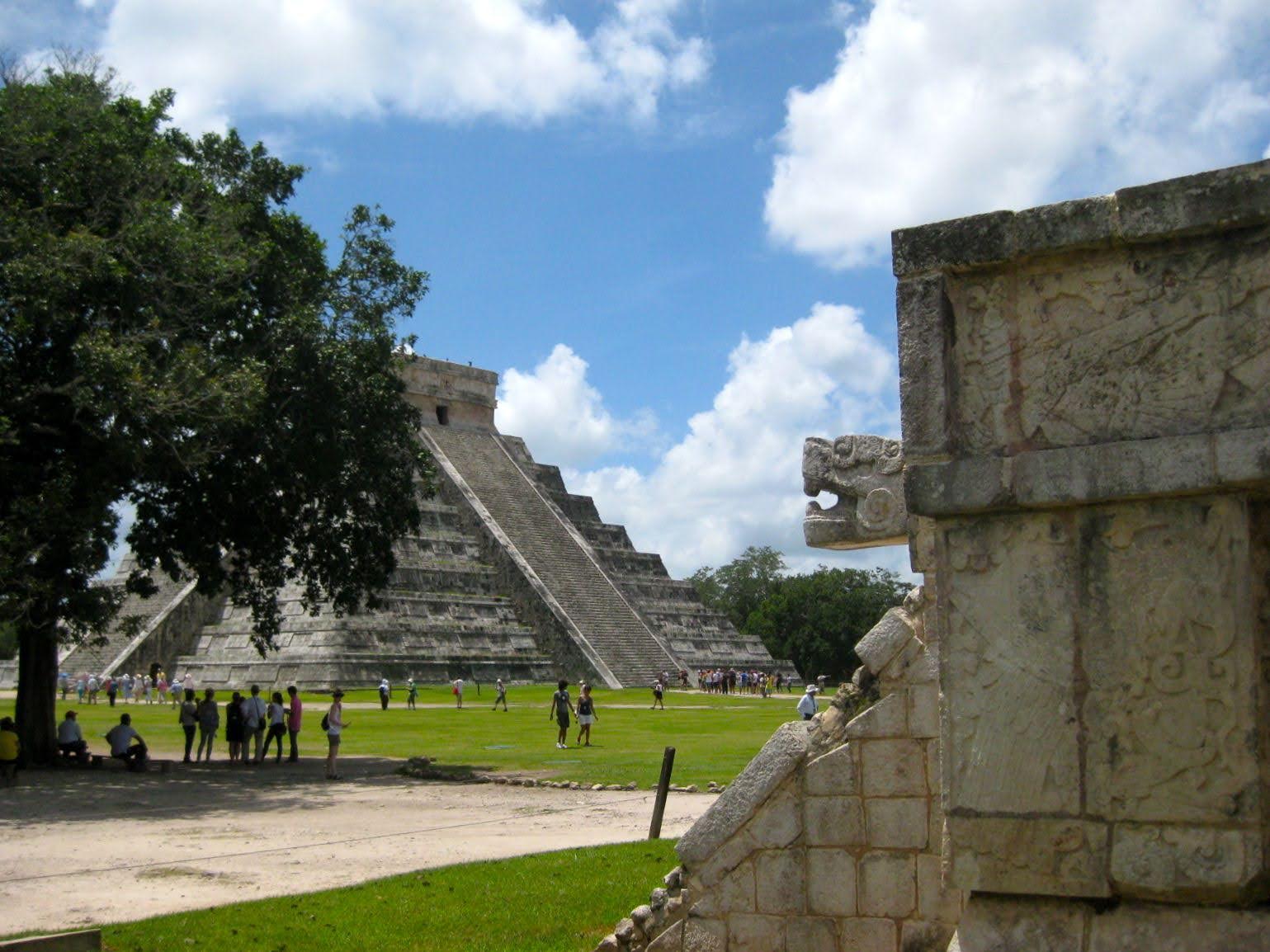
And yet El Castillo (Temple of Kukulcan) earns every superlative. The pyramid is a calendar in stone: four staircases of 91 steps each, plus the platform, total 365 — one for each day of the solar year. Each face aligns with solstice and equinox events. The scale is commanding and the geometry immaculate even from within the crowds. On the spring and autumn equinoxes, sunlight strikes the northern staircase in a way that creates a serpent-shadow illusion descending the balustrade — an event that now draws enormous crowds in its own right.
Beyond El Castillo: the Temple of the Warriors with its forest of carved columns, the Great Ball Court (the largest in Mesoamerica, with extraordinary acoustic properties — a whisper at one end is audible at the other), the Sacred Cenote (a natural sinkhole into which offerings — and people — were cast), and the Observatory (El Caracol), a circular tower with window apertures aligned to Venus. There is a great deal to see; budget at least two hours even in the heat and the crowd.
The vendor pressure between car park and entrance is intense — hundreds of stalls, persistent calls. The only way through is simply to keep walking. Once inside the archaeological zone itself it calms somewhat, though it never empties.
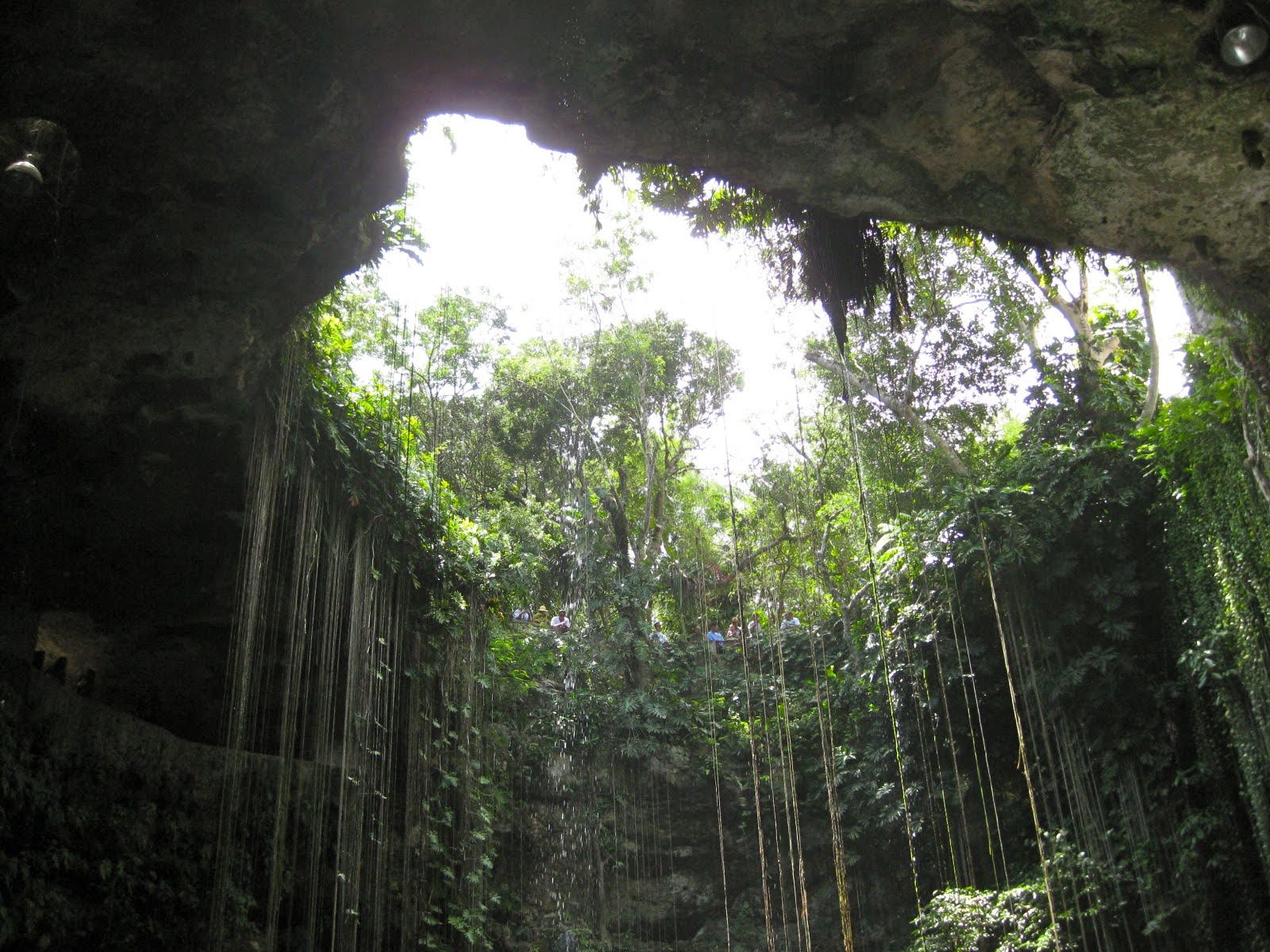
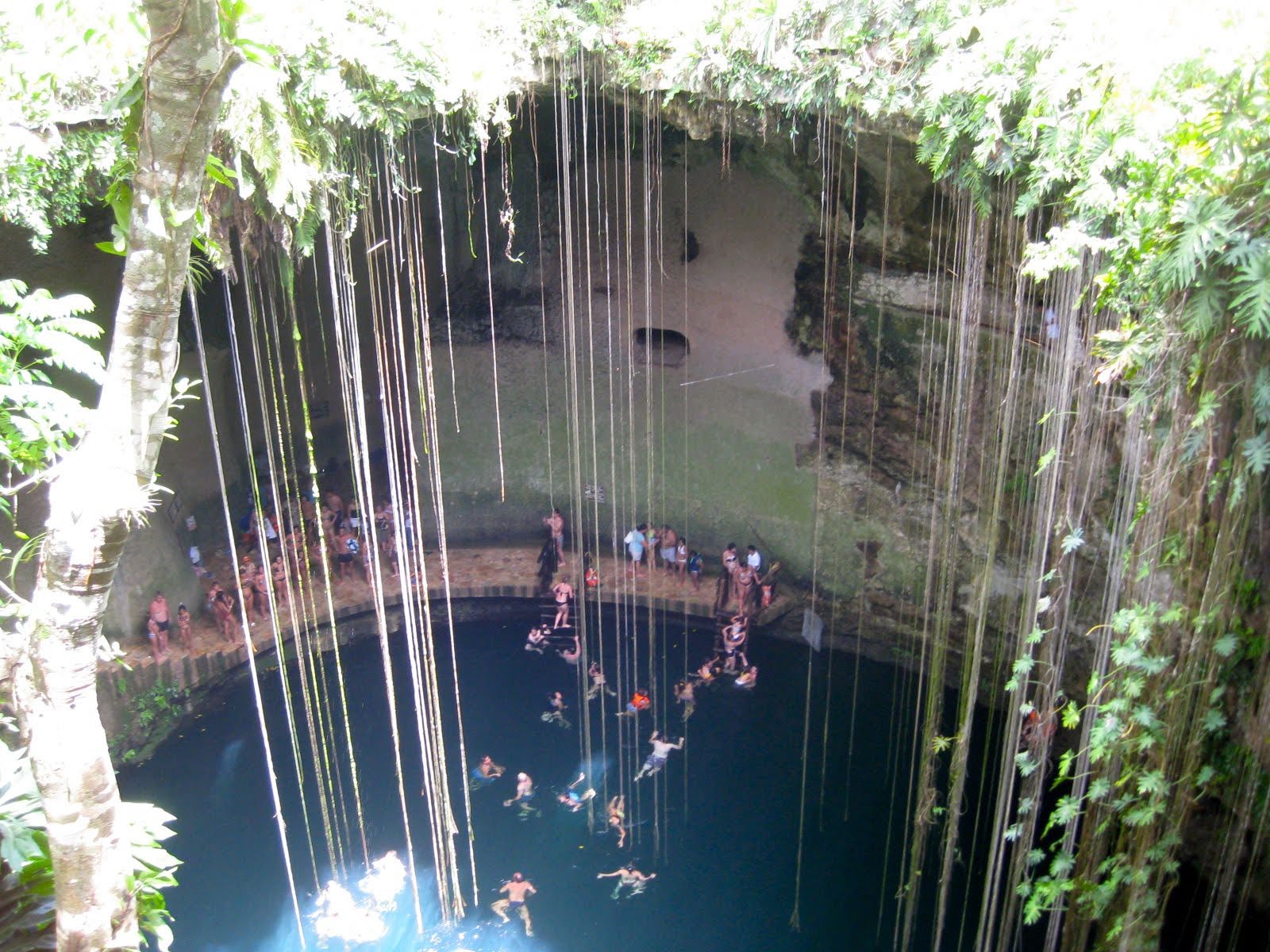
Ten minutes east of Chichén Itzá by car sits Cenote Ik Kil — and after a hot, noisy afternoon at the ruins it is close to perfect. A cenote is a natural sinkhole in the limestone bedrock, formed when underground cave systems collapse and expose pools of extraordinarily clear, cool fresh water. The Yucatán Peninsula sits atop a vast network of them.
Ik Kil is among the most dramatic: a near-circular opening roughly 60 metres in diameter, dropping 26 metres to the water surface below. Long roots and vines cascade from the rim downward into the shaft of light. The water itself is jade-green in direct sunlight and several shades darker in shadow. Swallows nest in the walls and dart through the opening. You descend to the water via a carved stone staircase.
The cenote is popular — it is on every tour itinerary from the resort strip — but its scale absorbs the numbers gracefully. The water is cold enough to be shocking after the afternoon heat, and the combination of the natural architecture overhead, the vegetation, and the cool clear water makes for one of those moments you remember clearly years later.
This is not a UNESCO site and makes no such claim, but as a way to close a long day of archaeology in the Yucatán heat, it is exceptional. Facilities on site include changing rooms, lockers, and food service.
| Time block | Segment | Transport | Practical note |
|---|---|---|---|
| ~07:00 | Depart Mérida | Private car | Early start is critical; Uxmal is best at opening time before any heat. |
| ~08:00–11:00 | Uxmal (UNESCO #791) | Walking on site | Site opens 08:00. Arrive at opening for near-solitude. Allow 2.5–3 hours. Pyramid of the Magician, Nunnery Quadrangle, Governor's Palace. |
| ~11:00–12:30 | Uxmal → Chichén Itzá | Private car (~1.5h east on MEX-261/180) | Good highway driving; stop for fuel and cold drinks en route. |
| ~12:30–15:00 | Chichén Itzá (UNESCO #483) | Walking on site | Yes, it will be crowded and hot. Plan for 2–2.5 hours. El Castillo, Ball Court, Temple of Warriors, Sacred Cenote. Bring water. |
| ~15:00–16:30 | Cenote Ik Kil | Car (~10 min east of Chichén Itzá) | Swim, recover, cool down. Allow 1–1.5 hours. Bring swimwear and towel. |
| ~16:30–19:00 | Cenote Ik Kil → Mérida | Private car (~2h west on MEX-180) | Return via toll highway. Arrive Mérida in time for dinner on the Zócalo. |
Yes, but only comfortably by private car. The two sites are about 180 km apart. We did it and it made for a long, full, rewarding day. Public transport between the two is possible but complicated and time-consuming. If you have access to a car, one day covers both sites well with time for Cenote Ik Kil.
Architecturally, Uxmal is extraordinary and arguably superior to Chichén Itzá for the quality and refinement of its stonework. The fact that it is much less visited means you can actually experience it with some space and quiet. If you have the choice, Uxmal and Chichén Itzá together is the ideal combination — but if forced to pick one, both have strong cases. Chichén Itzá is more iconic; Uxmal is more beautiful.
Very. The site receives over two million visitors per year. On any given weekday between October and April, there will be multiple tour groups from Cancún and the Riviera Maya present simultaneously. The vendor corridor between car park and entrance is genuinely overwhelming for first-time visitors. Inside the archaeological zone it spreads out a little. This should not stop you going — El Castillo is extraordinary — but go in with realistic expectations about the atmosphere.
Yes, it is well-managed with lifeguards and clear rules. The descent is by staircase, and the depth of the water (over 40 metres in the centre) means it is not suitable for non-swimmers without flotation aids, which can be rented on site. The water is very cold compared to Yucatán air temperatures — expect a shock when you enter. It is entirely safe for anyone comfortable swimming in open water.
No — climbing is prohibited at both Uxmal and Chichén Itzá. The restriction at Chichén Itzá has been in place since 2006 following a fatal accident on El Castillo. At Uxmal, access to some structures was also restricted for preservation reasons. The pyramids are experienced from ground level and from various approach angles, which still gives a powerful sense of scale.
October to March is the most comfortable: lower temperatures, lower humidity, and outside the peak resort season (Christmas and Easter weeks excluded — those are extremely crowded). April through June is hot and increasingly humid before the rainy season. July to September brings the rainy season and occasional tropical storms, though mornings are often clear and sites quieter.