Arles, Roman and Romanesque Monuments (UNESCO 164)
Cultural World Heritage in France, inscribed in 1981
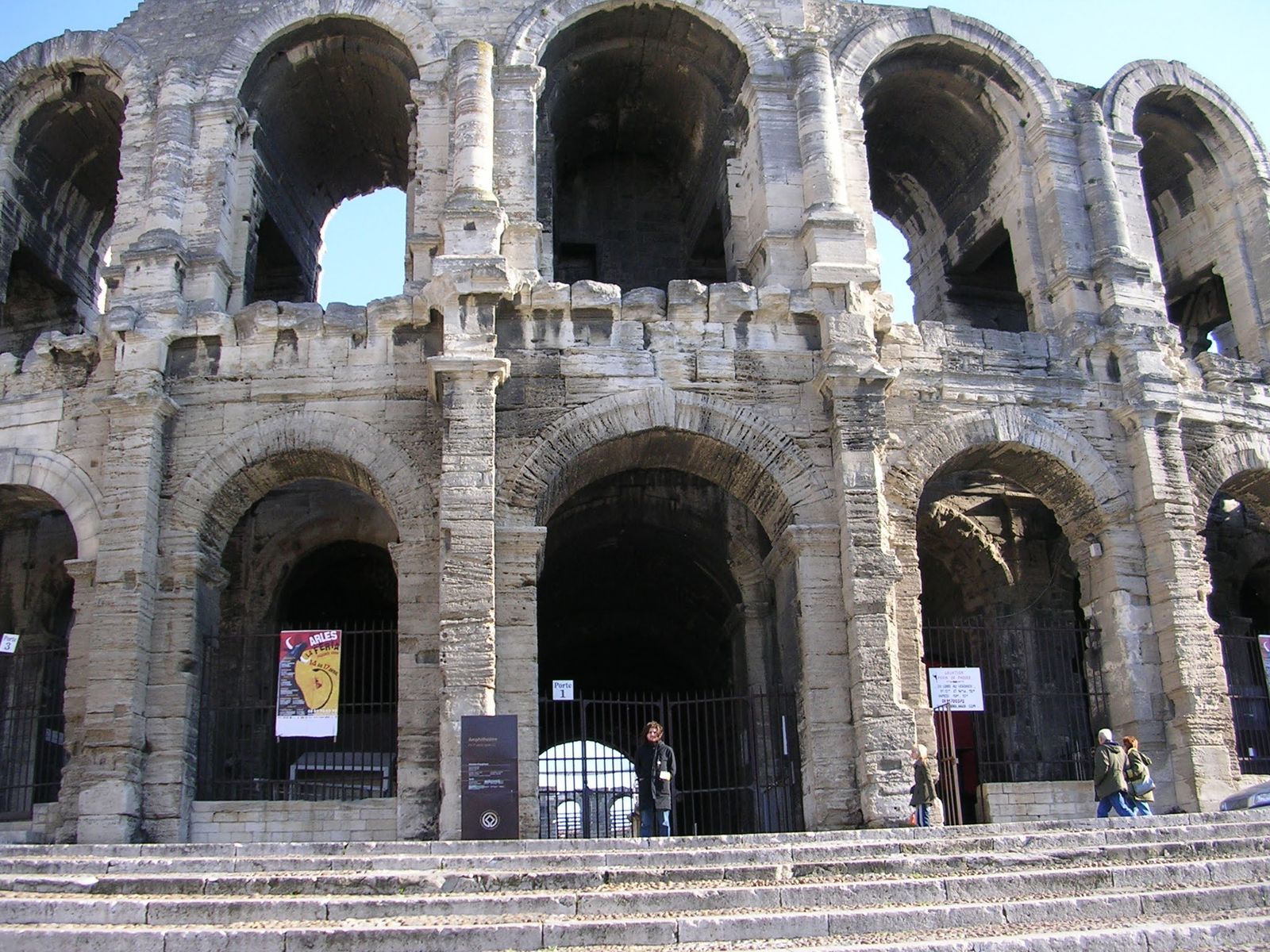
Located on the banks of the River Rhône, in the Provence-Alpes-Côte d’Azur region, the city of Arles developed in continuity with its urban structures—monuments, street grid, and public spaces—inherited from Antiquity and the Romanesque period. It thus provides a remarkable example of how an ancient city adapted to medieval European civilization. First and foremost, it preserves an outstanding ensemble of Roman monuments, the oldest of which—the amphitheatre (arena), the Roman theatre, and the cryptoporticus (subterranean galleries of the forum)—date back to the 1st century BC and the 1st century AD. Together, they form an exceptional group of monuments representative of the urban facilities introduced into Gaul by the Romans.
During Late Antiquity (4th–6th centuries), Arles rose to the status of a political and religious capital. The city then experienced a second golden age, as attested by the baths of Constantine and the sarcophagi of the Alyscamps necropolis, where the Church of Saint-Honorat was built in the 12th century in Provençal Romanesque style. In the 11th and 12th centuries, Arles once again became an important city within the Mediterranean world. The amphitheatre was turned into a fortress, while the baths of Constantine were converted into a count’s palace.
The Church of Saint-Trophime and its cloister exemplify the enduring influence of Antiquity on the development of Provençal art. Its portal was inaugurated for the coronation of the German emperor Frederick Barbarossa, crowned King of Arles in 1178. The architects and sculptors who built the cathedral and cloister belonged to a major artistic centre of artists contributing to the spread of Romanesque art in the antique style across Provence and Languedoc.