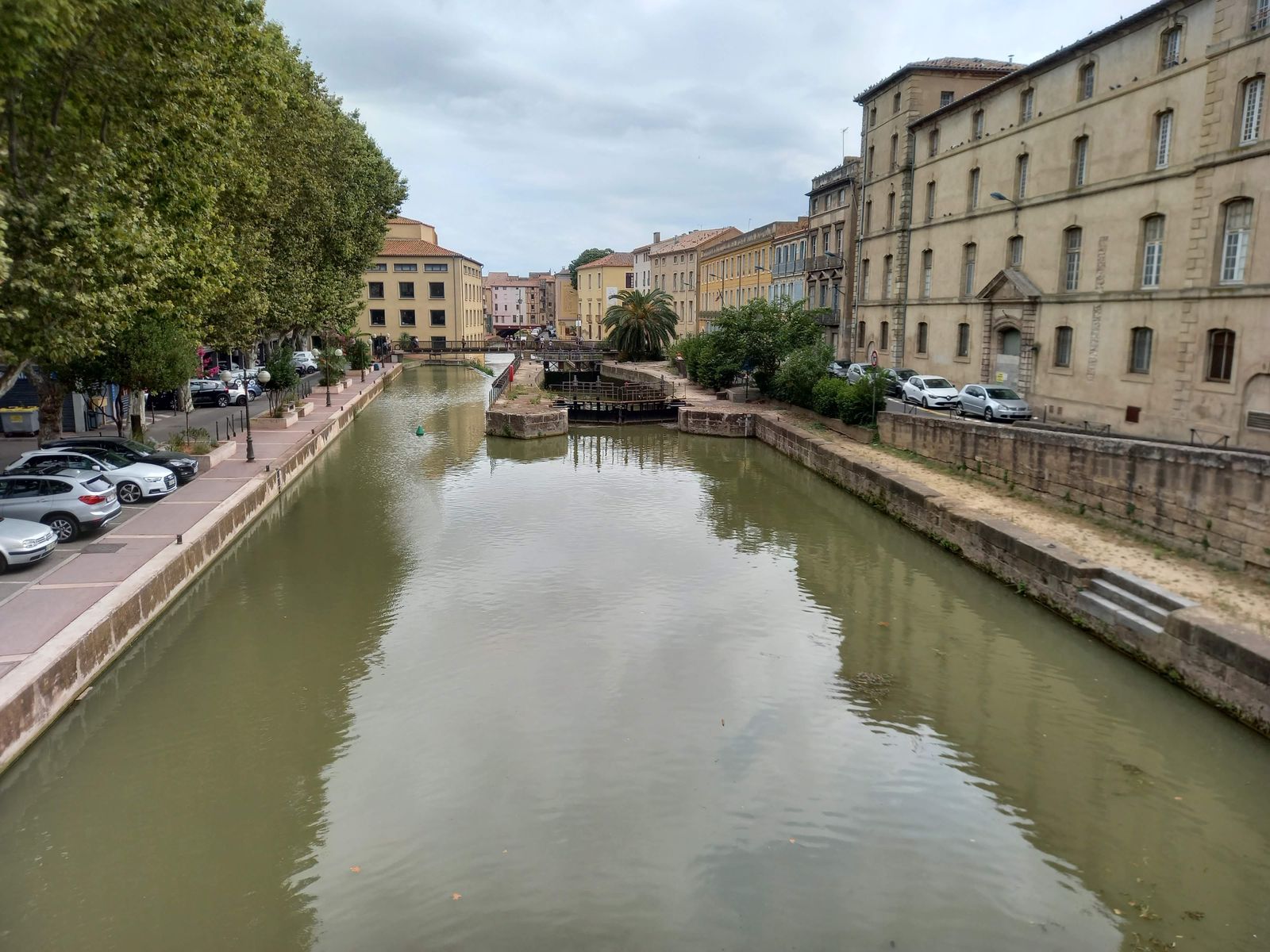
Canal du Midi (UNESCO 770)
Cultural World Heritage in France, inscribed in 1996
Located in the Occitan region, the Canal du Midi has 360 navigable kilometers and 328 structures (locks, aqueducts, bridges, spillways, tunnels, etc.). This civil engineering achievement, amongst the most extraordinary of the modern era, built between 1667 and 1694, paved the way for the Industrial Revolution. The concern for architectural aesthetics and man-made landscapes that inspired its designer, Pierre-Paul Riquet, made it not only a technical feat, but also a work of art. The Canal du Midi is the initial part of the Deux-Mers Canal project which aimed to link the Mediterranean and the Atlantic by connecting several sections of waterways.
It is the living testimony of the art and creativity of the engineers of the time of Louis XIV who triumphed over the difficult conditions of geography and hydrography to realize the immemorial dream of the "junction of the seas". Its wide-ranging technical and cultural impact inaugurated and influenced the modern era of creating navigable networks across the industrialized countries of Europe and North America. The Canal du Midi has five elements, namely the main section that connects Toulouse (Haute-Garonne) to Étang de Thau at Marseillan along the Mediterranean coast (Hérault) over a length of 240 km; the 36.6 km section between Moussan and Port-la-Nouvelle (Aude) which incorporates part of the former Canal de la Robine; the two branches that merge and flow into the canal at Naurouze (Aude) discharging the waters of the Montagne Noire; the Saint-Pierre Canal (1.6 km) which connects the main section of the Canal with the Garonne in Toulouse; the short section (0.5 km) that joins the Hérault to the round lock at Agde. One of the most remarkable features is the Saint-Ferréol dam on the Laudot River in the Montagne Noire region.
It is the largest work of the entire canal and the most important civil engineering site of the time.
The Committee decided to inscribe the nominated property on the basis of cultural criteria (i), (ii), (iv) and (vi) considering that the site is of outstanding universal value being one of the greatest engineering achievements of the Modern Age, providing the model for the flowering of technology that led directly to the Industrial Revolution and the modern technological age. Additionally, it combines with its technological innovation a concern for high aesthetic architectural and landscape design that has few parallels. The Committee endorsed the inscription of this property as the Canal du Midi clearly is an exceptional example of a designed landscape