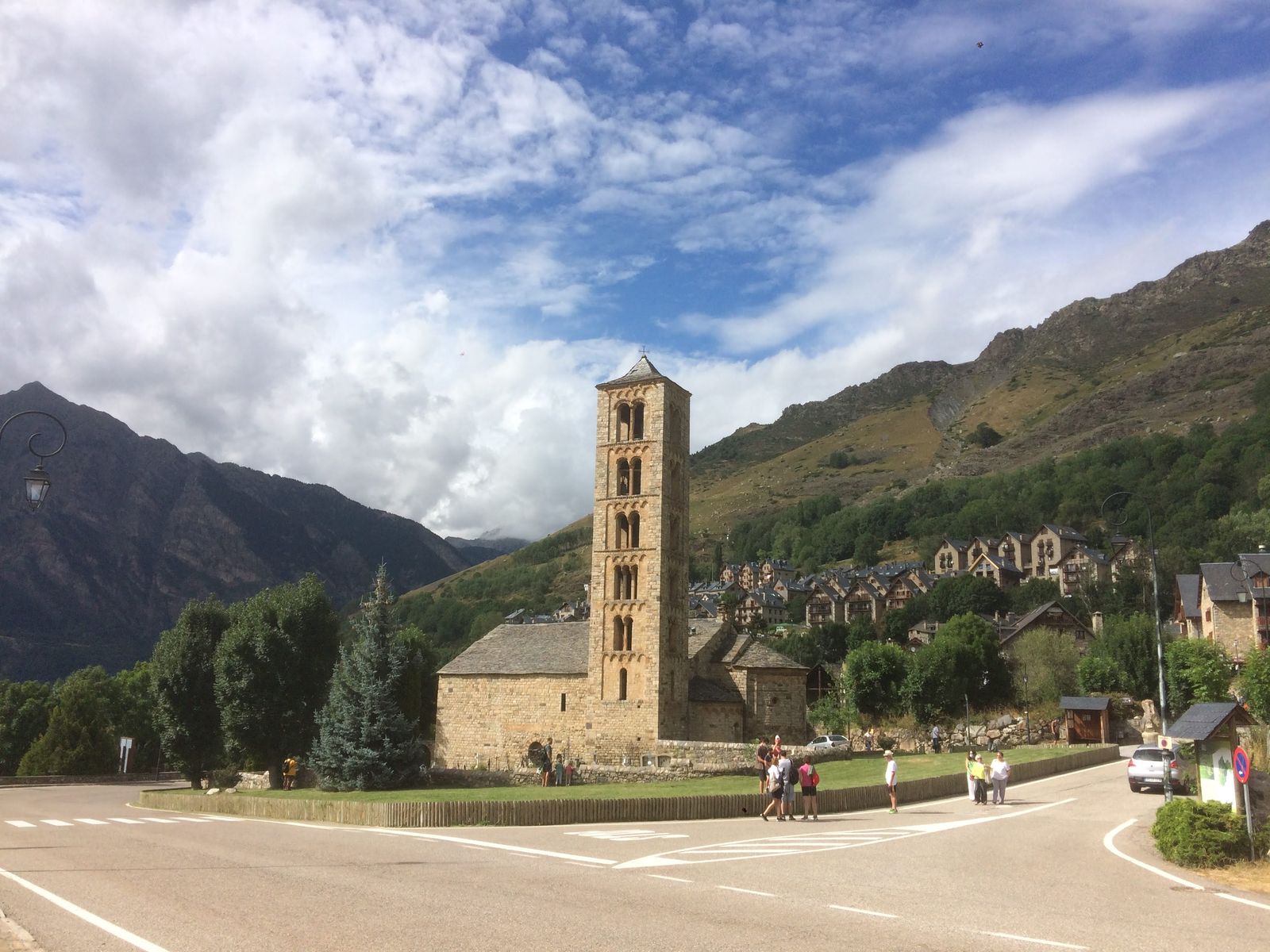
Catalan Romanesque Churches of the Vall de Boí (UNESCO 988)
Cultural World Heritage in Spain, inscribed in 2000
The Vall de Boí is located in the Catalan Pyrenees, in the district of Alta Ribagorça, 120 km north of Lleida, in the north-east of the Iberian Peninsula. The narrow valley is surrounded by steep mountains and each of the villages in it contains a Romanesque church. As a group, these churches represent an especially pure and consistent example of pictorial art and architecture in the Lombard Romanesque style. They were built between the 11th and 12th centuries under the patronage of the Lords of Erill, and were unusual for their placement on the fringe of their respective ancient villages and also for the richness of the interior pictorial decoration.
The components of this serial heritage property are the churches of Sant Feliu de Barruera, Sant Joan de Boí, Santa Maria de Taüll, Sant Climent de Taüll, Nativitat de Durro, Santa Eulàlia d’Erill-la-Vall, l’Assumpció de Santa Maria de Coll, Santa Maria de Cardet and the hermitage of Sant Quirc de Durro. The two churches in Taüll were declared national monuments in 1931, Sant Joan de Boí and Santa Eulàlia d’Erill-la-Vall in 1962, and the rest of the churches in 1993. It is in this group of exceptionally well preserved rural churches that the largest concentration in Europe of Romanesque art is to be found. This group is a unique example of the cultural tradition that flourished in Catalonia in the 12th century.
The Romanesque churches and the villages where they stand form an excellent example of a cultural landscape that has flourished in harmony with a natural environment that has remained intact to this day. The Lombard Romanesque style took a turn in the Pyrenean churches in which the indigenous rural spirit manifests itself in a remarkable way such as the line of the elegant bell-towers of Sant Climent de Taüll, Sant Joan de Boí and Santa Eulàlia d’Erill-la-Vall. The way of life in mediaeval Catalonia as expressed by this group of churches and villages can be said to have been of great importance in the recognition of Catalan cultural identity. The Romanesque art of these Pyrenean villages played a vital role in the movement for the restoration of Catalan nationality and identity in the early 20th century.
The importance of the churches of the Vall de Boí, however, lies in their group value: there is nowhere else in Europe with an ensemble of such notable churches built during the same, relatively short, period of time. Neither is there any other group that so vividly illustrates the transmission of a cultural movement able to pass over a high mountain barrier and become established, with high technical and artistic standards, in another territory. The group can therefore be considered a masterpiece of the period and an example of great human creativity.
Criterion (ii): The significant developments in Romanesque art and architecture in the churches of the Vall de Boí testify to profound cultural interchange across medieval Europe, and in particular across the mountain barrier of the Pyrenees.
Criterion (iv): The Churches of the Vall de Boí are an especially pure and consistent example of Romanesque art in a virtually untouched rural setting.