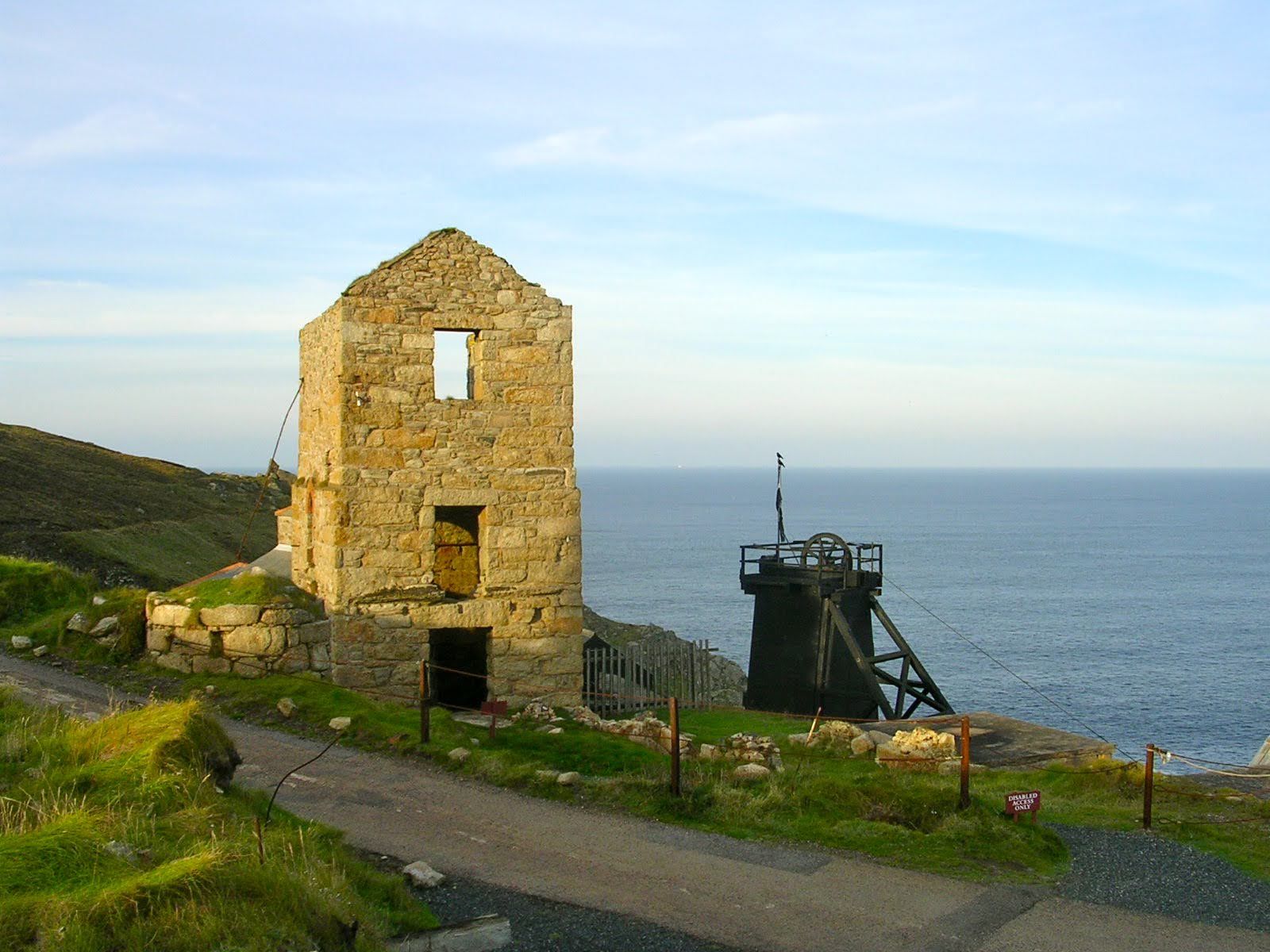
Cornwall and West Devon Mining Landscape (UNESCO 1215)
Cultural World Heritage in United Kingdom of Great Britain and Northern Ireland, inscribed in 2006
The landscapes of Cornwall and west Devon were radically reshaped during the eighteenth and nineteenth centuries by deep mining for predominantly copper and tin. The remains of mines, engines houses, smallholdings, ports, harbours, canals, railways, tramroads, and industries allied to mining, along with new towns and villages reflect an extended period of industrial expansion and prolific innovation. Together these are testimony, in an inter-linked and highly legible way, to the sophistication and success of early, large-scale, industrialised non-ferrous hard-rock mining. The technology and infrastructure developed at Cornish and west Devon mines enabled these to dominate copper, tin and later arsenic production worldwide, and to greatly influence nineteenth century mining practice internationally.
The extensive Site comprises the most authentic and historically important components of the Cornwall and west Devon mining landscape dating principally from 1700 to 1914, the period during which the most significant industrial and social impacts occurred. The ten areas of the Site together form a unified, coherent cultural landscape and share a common identity as part of the overall exploitation of metalliferous minerals here from the eighteenth to twentieth centuries. Copper and tin particularly were required in increasing quantities at this time through the growing needs of British industry and commerce. Copper was used to protect the hulls of ocean-going timber ships, for domestic ware, and as a major constituent of important alloys such as brass and, with tin, bronze.
The usage of tin was also increasing greatly through the requirements of the tin plate industry, for use in the canning of foods and in communications. The substantial remains within the Site are a prominent reminder of the contribution Cornwall and west Devon made to the Industrial Revolution in Britain and to the fundamental influence the area asserted on the development of mining globally. Innovative Cornish technology embodied in high-pressure steam engines and other mining equipment was exported around the world, concurrent with the movement of mineworkers migrating to live and work in mining communities based in many instances on Cornish traditions. The transfer of mining technology and related culture led to a replication of readily discernable landscapes overseas, and numerous migrant-descended communities prosper around the globe as confirmation of the scale of this influence.