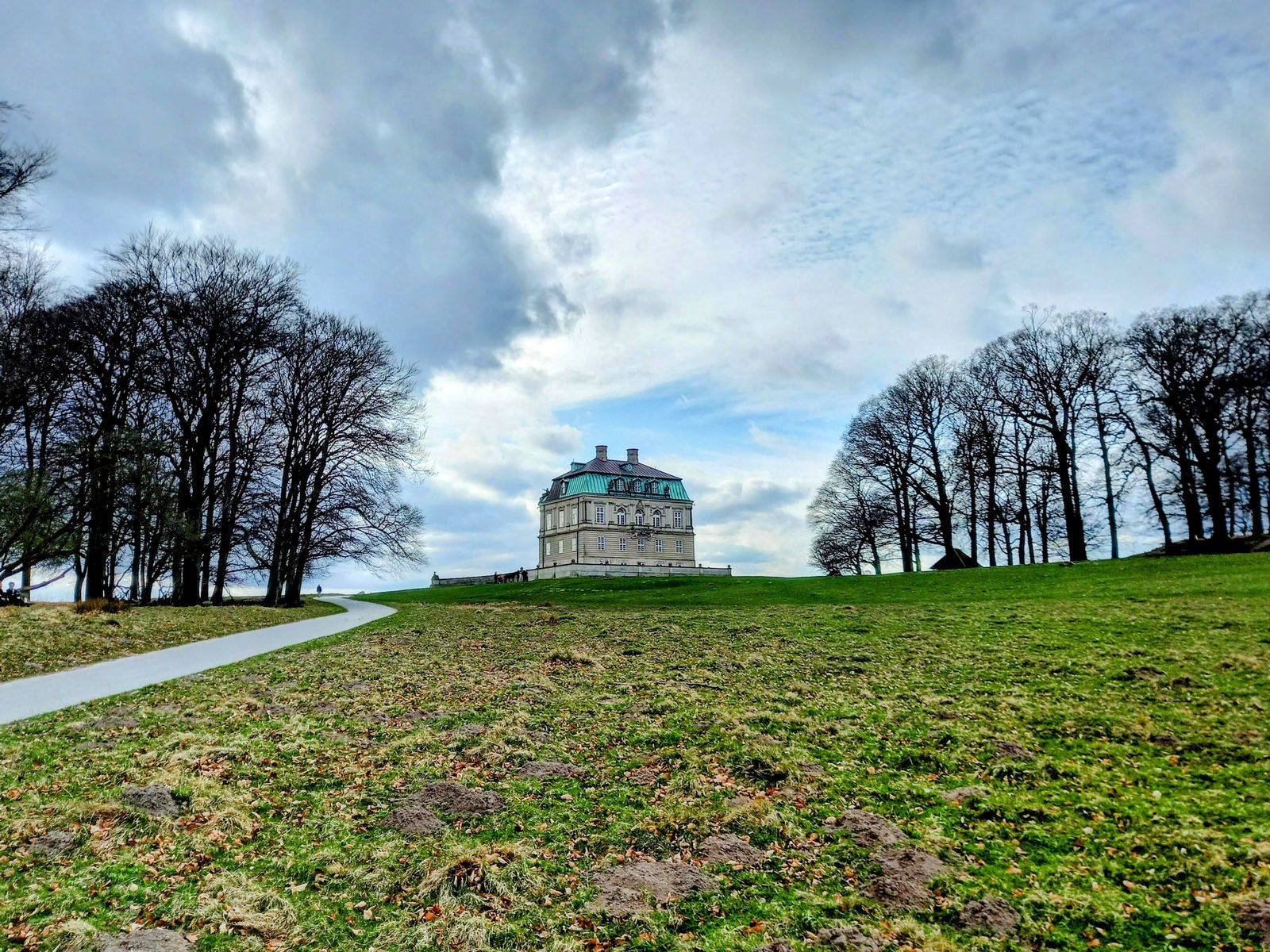
The par force hunting landscape in North Zealand (UNESCO 1469)
Cultural World Heritage in Denmark, inscribed in 2015
The par force hunting landscape in North Zealand series covers the former royal hunting forests of Store Dyrehave and Gribskov, traces of connecting roads between them, and the former royal hunting park of Jægersborg Dyrehave/Jægersborg Hegn. The entire former royal forest landscape covered a much larger area with a number of royal castles. The components have been selected as they encompass a completeness of attributes illustrating the development of the Baroque par force hunting landscape as an emblematic and functional spatial entity. Designed and created intentionally by Man, the par force hunting landscape exemplifies a 17th-18th-century landscape created to perform courtly hunts.
Its layout results from the combination of French and German design models based on a central-star grid system, combined with an orthogonal grid subdivision, which optimised its function during the hunt, and makes it emblematic of an absolute European monarch, his role in society, and his reason and power to control nature. The Outstanding Universal Value of the landscape lies in the spatial organisation of the hunting forests, hunting roads, buildings, emblematic markers, numbered stone posts, stone fences, and numerical road names conveying an understanding of the practical application of the design as a means of orientation.