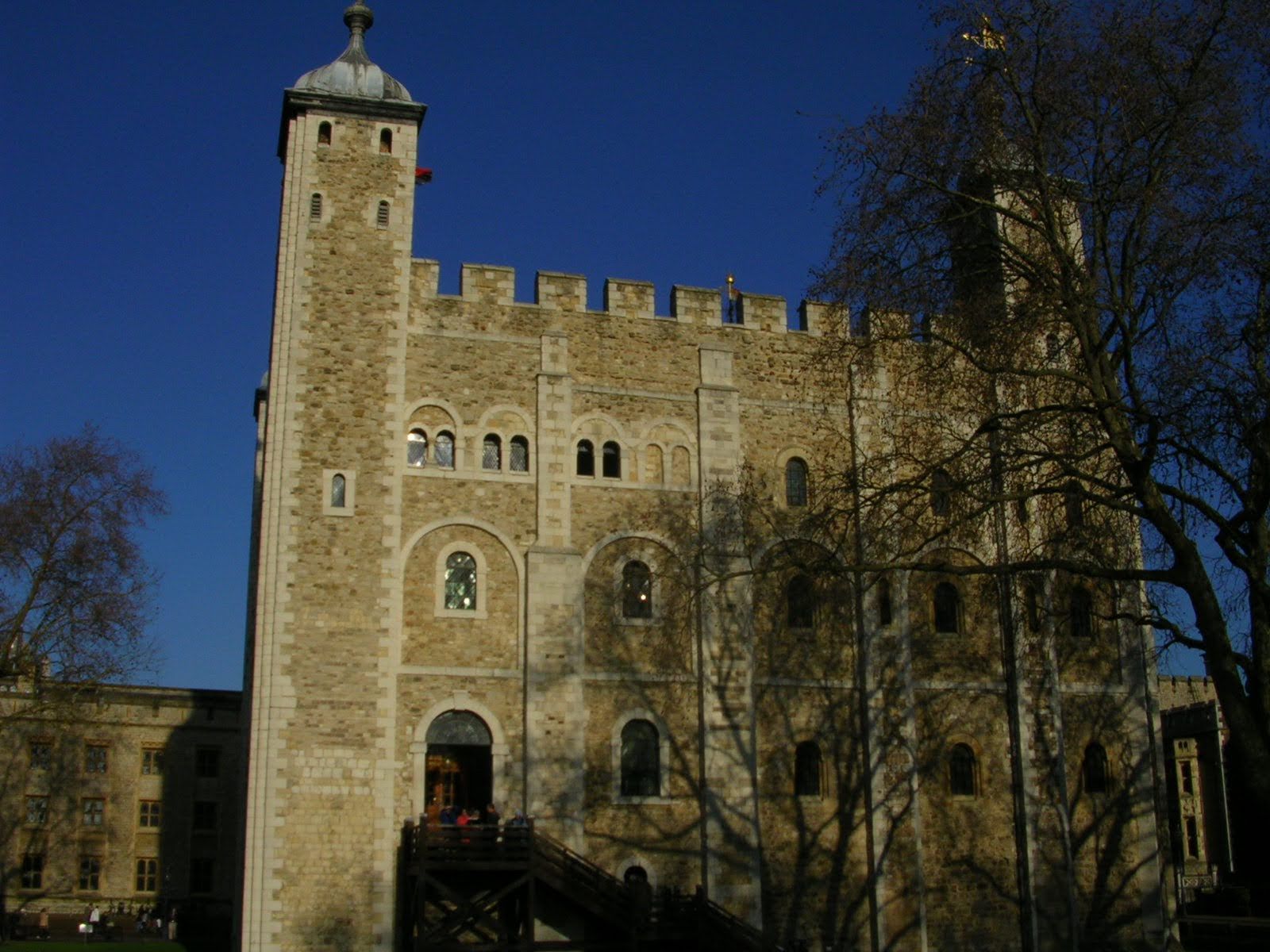
Tower of London (UNESCO 488)
Cultural World Heritage in United Kingdom of Great Britain and Northern Ireland, inscribed in 1988
The Tower of London is an internationally famous monument and one of England’s most iconic structures. William the Conqueror built the White Tower in 1066 as a demonstration of Norman power, siting it strategically on the River Thames to act as both fortress and gateway to the capital. It is the most complete example of an 11th century fortress palace remaining in Europe. A rare survival of a continuously developing ensemble of royal buildings, from the 11th to 16th centuries, the Tower of London has become one of the symbols of royalty.
It also fostered the development of several of England’s major State institutions, incorporating such fundamental roles as the nation’s defence, its record-keeping and its coinage. It has been the setting for key historical events in European history, including the execution of three English queens. The Tower of London has Outstanding Universal Value for the following cultural qualities: For both protection and control of the City of London, it has a landmark siting. As the gateway to the capital, the Tower was in effect the gateway to the new Norman kingdom.
Sited strategically at a bend in the River Thames, it has been a crucial demarcation point between the power of the developing City of London, and the power of the monarchy. It had the dual role of providing protection for the City through its defensive structure and the provision of a garrison, and of also controlling the citizens by the same means. The Tower literally ‘towered’ over its surroundings until the 19th century. The Tower of London was built as a demonstration and symbol of Norman power.
The Tower represents more than any other structure the far-reaching significance of the mid-11th century Norman Conquest of England, for the impact it had on fostering closer ties with Europe, on English language and culture, and in creating one of the most powerful monarchies in Europe. The Tower has an iconic role as reflecting the last military conquest of England. The property is an outstanding example of late 11th century innovative Norman military architecture. As the most complete survival of an 11th-century fortress palace remaining in Europe, the White Tower, and its later 13th and 14th century additions, belong to a series of edifices which were at the cutting edge of military building technology internationally.
They represent the apogee of a type of sophisticated castle design, which originated in Normandy and spread through Norman lands to England and Wales. The property is a model example of a medieval fortress palace, which evolved from the 11th to 16th centuries. The additions of Henry III and Edward I, and particularly the highly innovative development of the palace within the fortress, made the Tower into one of the most innovative and influential castle sites in Europe in the 13th and early 14th centuries, and much of their work survives. Palace buildings were added to the royal complex right up until the 16th century, although few now stand above ground.
The survival of palace buildings at the Tower allows a rare glimpse into the life of a medieval monarch within their fortress walls. The Tower of London is a rare survival of a continuously developing ensemble of royal buildings, evolving from the 11th to the 16th centuries, and as such, has great significance nationally and internationally. The property has strong associations with State Institutions. The continuous use of the Tower by successive monarchs fostered the development of several major State Institutions.
These incorporated such fundamental roles as the nation’s defence, its records, and its coinage. From the late 13th century, the Tower was a major repository for official documents, and precious goods owned by the Crown. The presence of the Crown Jewels, kept at the Tower since the 17th century, is a reminder of the fortress’ role as a repository for the Royal Wardrobe. As the setting for key historical events in European history: The Tower has been the setting for some of the most momentous events in European and British History.
Its role as a stage upon which history has been enacted is one of the key elements which has contributed towards the Tower’s status as an iconic structure. Arguably, the most important building of the Norman Conquest, the White Tower symbolised the might and longevity of the new order. The imprisonments in the Tower of Edward V and his younger brother in the 15th century, and then, in the 16th century, of four English queens, three of them executed on Tower Green – Anne Boleyn, Catherine Howard and Jane Grey – with only Elizabeth I escaping, shaped English history. The Tower also helped shape the story of the Reformation in England, as both Catholic and Protestant prisoners (those that survived) recorded their experiences and helped define the Tower as a place of torture and execution.