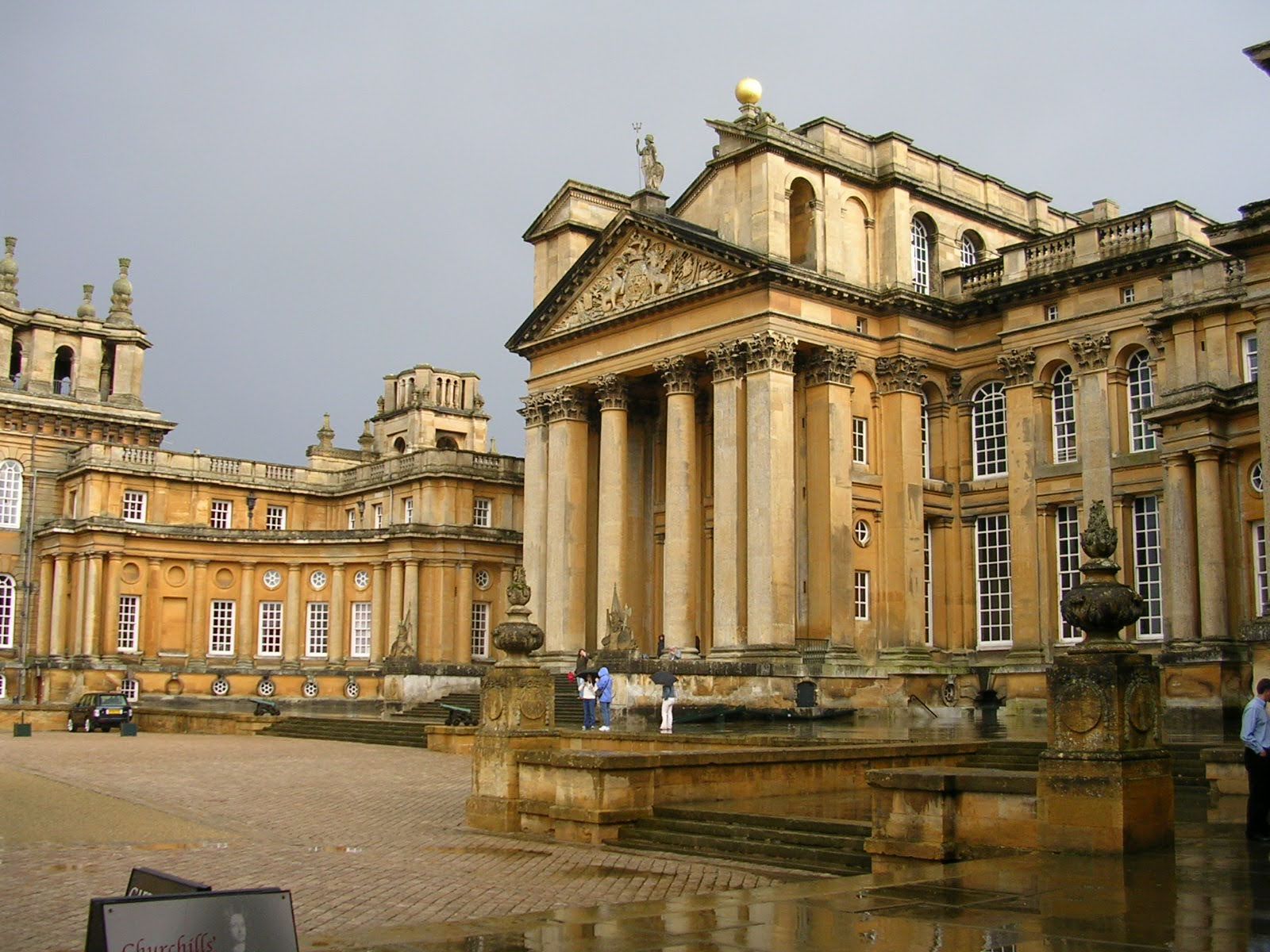
Blenheim Palace (UNESCO 425)
Cultural World Heritage in United Kingdom of Great Britain and Northern Ireland, inscribed in 1987
Blenheim Palace, in Oxfordshire, was designed by John Vanbrugh. The English nation presented the site to John Churchill, first Duke of Marlborough, in recognition of his victory in 1704 over French and Bavarian troops, a victory which decided the future of the Empire and, in doing so, made him a figure of international importance. The Palace sits within a large walled landscape park, the structure by Vanbrugh overlaid by the designs of Lancelot “Capability” Brown from 1761 onwards. The design and building of the Palace between 1705 and 1722 represented the beginning of a new style of architecture and its landscaped Park, designed by Lancelot “Capability” Brown, is considered “a naturalistic Versailles”.
In tangible form, Blenheim is an outstanding example of the work of John Vanbrugh and Nicholas Hawksmoor, two of England’s most notable architects. It represents a unique architectural achievement celebrating the triumph of the English armies over the French, and the Palace and its associated Park have exerted great influence on the English Romantic movement which was characterised by the eclecticism of its inspiration, its return to natural sources and its love of nature. The original landscape set out by John Vanbrugh, who regulated the course of the River Glyme, was later modified by Lancelot “Capability” Brown who created two lakes, seen as one of the greatest examples of naturalistic landscape design. Blenheim Palace was built by the nation to honour one of its heroes John Churchill, the first Duke of Marlborough, and is also closely associated with Sir Winston Churchill.