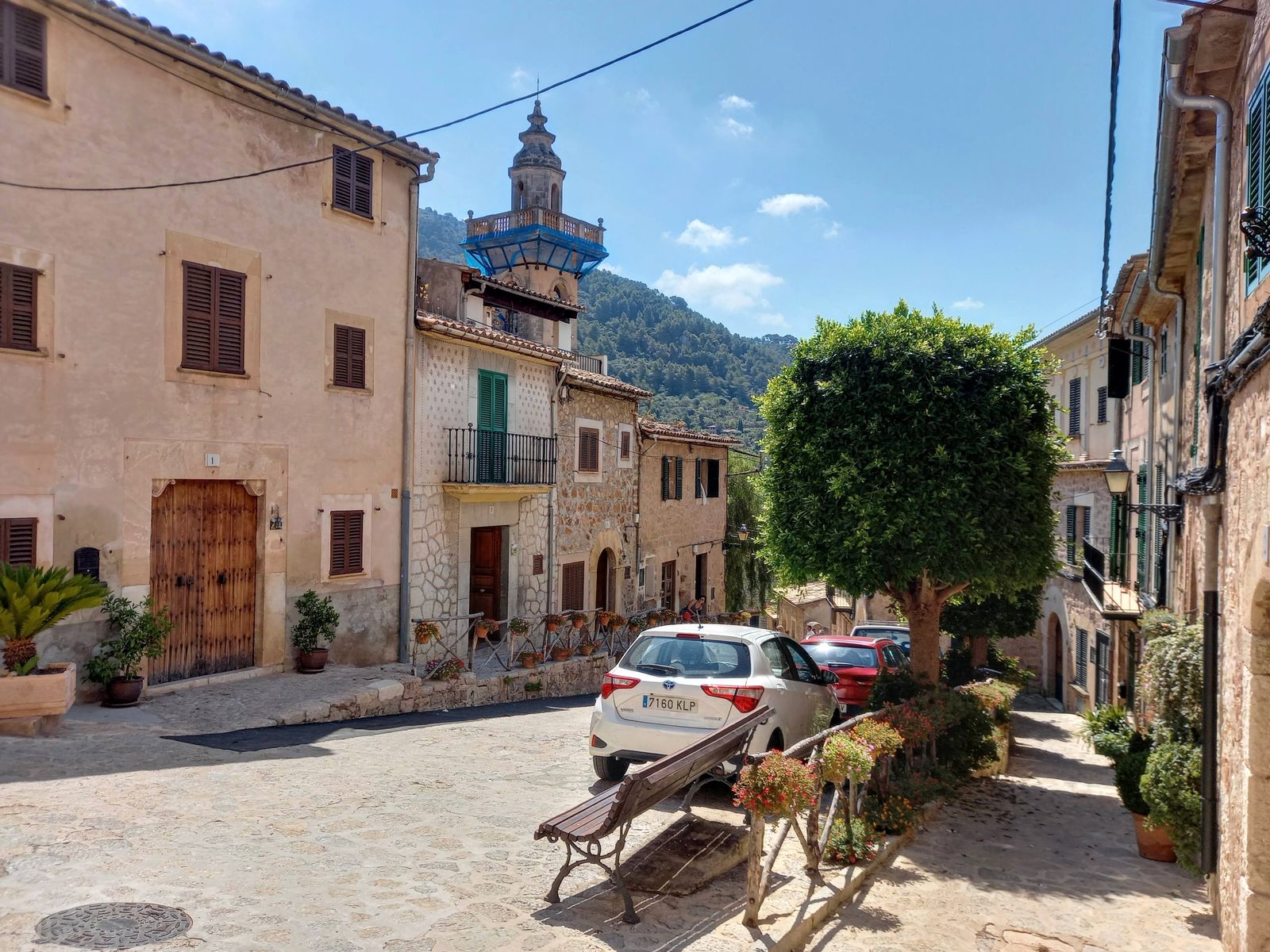
Cultural Landscape of the Serra de Tramuntana (UNESCO 1371)
Cultural World Heritage in Spain, inscribed in 2011
The cultural landscape of the Serra de Tramuntana constitutes a significant example of the Mediterranean agricultural landscape, which, after centuries of transformations of the steep terrain morphology to exploit the scarce available resources and thanks to the specific orogenetic, climatic and vegetation conditions, has been made productive and well-adapted to human settlement. The system of terraces and cobbled road network, common to many Mediterranean landscapes, is here combined with an articulated network of devices for the management of water, revolving around farming units of feudal origins. Several villages, churches, sanctuaries, towers, lighthouses and small dry-stone structures punctuate the terraced landscape and contribute to its actual character.