Talayotic Menorca (UNESCO 1528)
Cultural World Heritage in Spain, inscribed in 2023
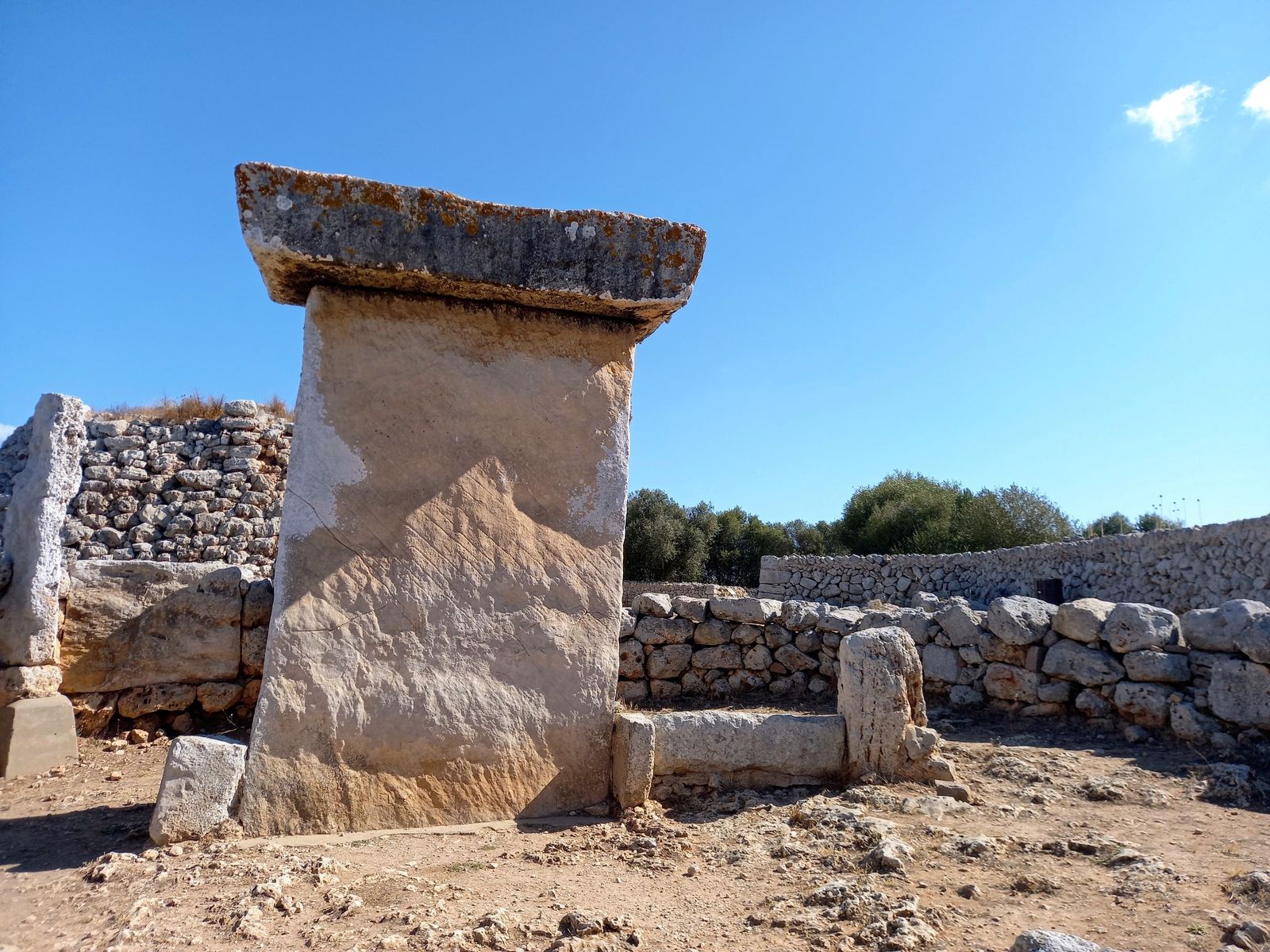
Located on the Island of Menorca, the second largest of the Balearic Islands in the western Mediterranean Sea, a series of nine component parts in the Migjorn and Tramuntana regions of Menorca encompasses a dense assemblage of archaeological sites that feature cyclopean structures dating from the Bronze Age (1600 BCE) to the Late Iron Age (123 BCE). Agropastoral landscapes recall the occupation of the island by prehistoric communities in diverse settlements and burial sites scattered across the dry tableland in the south and in the rugged hills rising in the north. Cyclopean architecture – which consists of structures built of very large blocks of stone without mortar – in a wide range of typologies illustrate the evolution of the island’s dry stone building practices. The characteristic structures include hypogea (artificial caves), talayots (large cone-shaped structures, generally truncated), taula enclosures (religious structures with a central T-shaped construction formed by a large supporting rectangular stone slab and an inverted truncated pyramidal capital), navetas (which display an inverted ship shape, and in some cases rounded ground plans), circular houses, and hypostyles (roofs supported by pillars).
The evolution on the spatial organisation of these prehistoric structures suggests the emergence of a hierarchical society. Distinct visual interconnections between archaeological sites indicate the existence of social networks, and astronomical orientations imply possible cosmological meanings. Together, this series of ancient stone-built settlements and their landscapes provide a window into this region’s prehistoric island cultures.