La Lonja de la Seda de Valencia (UNESCO 782)
Cultural World Heritage in Spain, inscribed in 1996
La Longa de la Seda de Valencia, located on the Mediterranean coast of the Iberian Peninsula, is without a doubt the most emblematic group of buildings of the city. La Longa de la Seda de Valencia is an exceptionally well-preserved example of a secular building in late Gothic style of outstanding artistic value. It bears eloquent witness to the role played in the Mediterranean and far beyond by the merchants of the Iberian Peninsula in the 15th and 16th centuries. Built from 1483 on the initiative of the Consell de la Ciutat (City Council) and under the direction of the architects Pere Compte and Joan Ivarra, the complex of buildings was originally dedicated to the silk trade (hence the name "Silk Exchange").
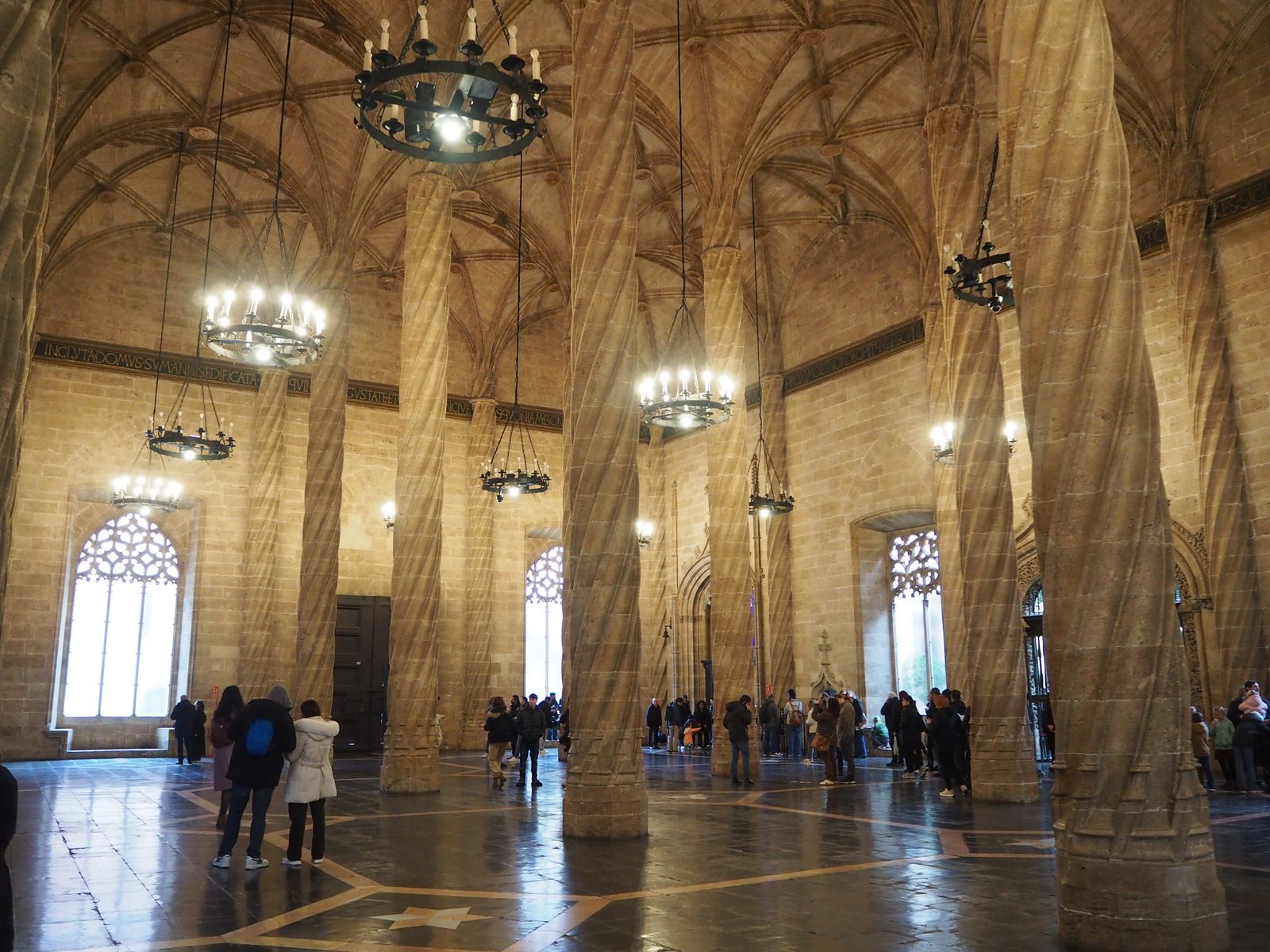
Nearly half of the monuments’ surface area, which is rectangular in plan, is covered by the Sala de Contratación. The tower (including the chapel), the Sala del Consulado del Mar and the Patio de los Naranjos (Court of Orange Trees) complete the complex. The Sala de Contratación is a magnificent hall in Flamboyant Gothic style. The interior, with three main aisles, is covered by a series of cross vaults resting on slender helical pillars almost 16 metres high.
The floor is paved with Alcublas marble of different colours. On the walls, a Latin inscription in Gothic characters reminds the merchants of their duties as merchants and good Christians: not to revert to usury in their trade, so as to be able to attain eternal life. Light enters through soaring Gothic windows, the external frames of which, like the doors, are exuberantly ornamented, notably by a series of grotesque gargoyles. In the centre of the main facade, on the Plaza del Mercado, is the imposing doorway, crowned by an image of the Virgin, and with the royal coat of arms of Aragon.
The delicate windows on either side are surmounted by the arms of the town. The same architectonic scheme is repeated at the other end of the hall. This building, like the rest of the ensemble, is crenellated. The Taula de Canvis, the first municipal banking institution created in 1407, was installed in the salon dedicated to commercial transactions.
Access to the chapel which forms the ground floor of the Tower is via the Sala de Contratación. It is square in plan, with vaulting springing from angular column groups. Access to the upper floors is via a remarkable helical staircase executed with great technical perfection and without a central axis. The Consulado del Mar, built at the beginning of the 16th century, has a vaulted cellar and two levels.
In addition to the aforementioned Pere Compte, project managers Joan Corbera and Domingo de Urtiaga were also involved in its construction. It is a late Gothic style building, exuberant in the decoration of its facades, especially on the upper floor where the windows have richly decorated sills and lintels and are crowned by portrait medallions. The interior is notable for the carved decoration enriched by gilding and paintings of the chamber on the first floor - the piano nobile, or Cambra Dourada (Golden Room). The coffered ceiling came from the old City Hall, now demolished.
La Lonja is a typical example of functional architecture for commercial activities. The ornamental repertoire that enriches the building expresses a symbolic message that exalts the dignity of the merchant by encouraging him to exercise his important social responsibility, in solidarity with the community in which he is integrated, with the utmost probity, fairness and honesty. In addition to being a very representative example of medieval places of commerce, the building incorporates elements of the new architectonic language that developed in Europe at the end of the 15th century incorporating the most daring progress in the field of construction techniques (admirable twisted columns and vaults of remarkable complexity, all in freestone of the highest quality).
The Committee decided to inscribe the nominated property on the basis of cultural criteria (i) and (iv), considering that the site is of outstanding universal value as it is a wholly exceptional example of a secular building in late Gothic style, which dramatically illustrates the power and wealth of one of the great Mediterranean mercantile cities.